The Impact of No-Code Automation on Reducing Administrative Burdens 🚀
Remember when your biggest workplace worry was whether the coffee machine would work that morning? Those days feel like a distant memory now that we’re drowning in spreadsheets, endless email chains, and repetitive tasks that seem to multiply overnight. If you’ve ever found yourself wondering why you spend more time managing processes than actually doing meaningful work, you’re not alone. The good news? No-code automation is here to rescue us from the administrative quicksand we’ve been sinking in.
The digital transformation wave has brought us incredible opportunities, but it’s also created an unexpected side effect: administrative overload. Every new tool, platform, and process seems to come with its own set of manual tasks that someone needs to handle. That’s where no-code automation swoops in like a digital superhero, promising to free us from the mundane so we can focus on what truly matters.
Understanding the Administrative Burden Crisis 📊
Let’s be honest about what we’re dealing with here. The average knowledge worker spends approximately 41% of their time on discretionary activities that offer little personal satisfaction and could easily be handled by others. That’s nearly half of your workday spent on tasks that don’t require your unique skills or expertise!
Think about your typical Monday morning. You’re probably updating project status reports, copying data between different systems, sending follow-up emails, scheduling meetings, and managing various approval workflows. By the time you finish these administrative tasks, it’s already lunch time, and you haven’t even started on the work that actually drives your business forward.
This administrative burden isn’t just frustrating – it’s expensive. Companies lose billions of dollars annually to inefficient processes and manual work that could be automated. More importantly, it’s burning out talented employees who joined organizations to make an impact, not to become human copy-paste machines.
What Exactly is No-Code Automation? 🔧
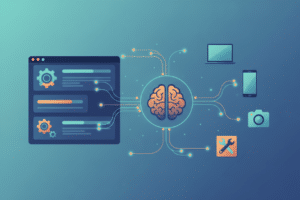
No-code automation is exactly what it sounds like – creating automated workflows and processes without writing a single line of code. Instead of needing a computer science degree or a development team, you can build sophisticated automation using visual interfaces, drag-and-drop builders, and simple logic rules.
Picture this: instead of manually copying lead information from your contact form to your CRM, then creating a task in your project management tool, then sending a welcome email, and finally updating your spreadsheet – you set up one automated workflow that does all of this in seconds. That’s the magic of no-code automation.
These platforms have democratized automation, putting powerful tools in the hands of everyday business users. Marketing managers can automate their campaign workflows, HR professionals can streamline onboarding processes, and sales teams can automate their follow-up sequences – all without bothering the IT department or waiting months for custom development.
Key Areas Where No-Code Automation Eliminates Administrative Tasks 💼
Data Entry and Management
Data entry might be the most soul-crushing administrative task known to humanity. It’s repetitive, error-prone, and takes forever. No-code automation transforms this nightmare into a seamless background process. Whether you’re moving customer information between systems, updating inventory records, or maintaining employee databases, automation handles it all while you focus on analyzing the data instead of just moving it around.
I’ve seen marketing teams cut their weekly reporting time from 6 hours to 15 minutes by automating data collection from various platforms into a single dashboard. The time savings are incredible, but the reduction in human error is even more valuable.
Email and Communication Management
Email management is another administrative quicksand pit. Automated email sequences, smart filtering, and intelligent routing can transform your inbox from a source of stress into an organized communication hub. No-code tools can automatically categorize emails, send personalized responses, schedule follow-ups, and even escalate urgent messages to the right people.
Customer service teams are particularly benefiting from this. Instead of manually sorting support tickets and sending acknowledgment emails, automated systems can instantly categorize issues, route them to the appropriate specialists, and keep customers informed throughout the resolution process.
Approval Workflows and Document Management
Traditional approval processes are administrative nightmares. Documents get lost in email chains, approvals get delayed because someone’s on vacation, and tracking the status of requests becomes a full-time job. No-code automation creates clear, trackable approval workflows that move documents through the proper channels automatically.
Expense reports, purchase orders, content approvals, and HR requests can all flow through automated systems that ensure nothing falls through the cracks while maintaining proper oversight and compliance.
Real-World Success Stories and Case Studies 📈
Let me share some inspiring examples of organizations that have transformed their operations with no-code automation. A mid-sized marketing agency reduced their client onboarding time from two weeks to two days by automating contract generation, project setup, and team notifications. Their client satisfaction scores improved dramatically because new projects started faster and more smoothly.
Another powerful example comes from a nonprofit organization that automated their donor management process. Previously, staff spent hours manually entering donation information, sending thank-you letters, and updating donor records. With no-code automation, donations are automatically recorded, personalized thank-you emails are sent immediately, and donor profiles are updated in real-time. This freed up their team to focus on relationship building and program development instead of data entry.
A growing e-commerce business automated their entire order fulfillment communication chain. From the moment a customer places an order until delivery confirmation, automated workflows handle order confirmations, shipping notifications, tracking updates, and follow-up surveys. Customer satisfaction increased while their small team was able to handle triple the order volume without hiring additional staff.
Implementation Strategies for Maximum Impact 🎯
Successfully implementing no-code automation isn’t just about choosing the right tools – it’s about approaching the transformation strategically. Start by conducting an administrative task audit. Spend a week documenting every repetitive task you and your team perform. You’ll probably be shocked by how much time you’re spending on automatable work.
Once you’ve identified your biggest pain points, prioritize them based on frequency and impact. That daily report that takes 30 minutes to compile? That’s a perfect automation candidate. The monthly task that takes two hours? Maybe save that for later in your automation journey.
Begin with simple, low-risk automations to build confidence and demonstrate value. Success breeds enthusiasm, and you’ll find team members becoming automation advocates once they experience the benefits firsthand. Create a center of excellence or automation champions program to share knowledge and best practices across your organization.
Don’t forget about change management. Some team members might worry that automation threatens their job security. Address these concerns head-on by emphasizing how automation eliminates boring, repetitive work and creates opportunities for more strategic, creative, and fulfilling responsibilities.
Overcoming Common Challenges and Barriers 🛠️
Let’s address the elephant in the room – implementing automation isn’t always smooth sailing. One of the biggest challenges is the “not invented here” syndrome, where teams resist using new tools because they’re comfortable with existing processes, even if those processes are inefficient.
Data quality and integration issues can also derail automation efforts. If your data is messy or scattered across incompatible systems, automation might initially create more problems than it solves. Invest time in data cleanup and system integration before building complex workflows.
Security and compliance concerns are legitimate, especially in regulated industries. Work closely with your IT and compliance teams to ensure automated workflows meet all security requirements and maintain proper audit trails. Most modern no-code platforms offer enterprise-grade security features, but you need to configure them correctly.
Scope creep is another common pitfall. It’s tempting to automate everything at once, but this often leads to overly complex workflows that are difficult to maintain and troubleshoot. Start simple and expand gradually as you gain experience and confidence.
The Future of Administrative Work in an Automated World 🔮
As no-code automation becomes more sophisticated and accessible, we’re heading toward a future where administrative burden becomes largely obsolete. Artificial intelligence and machine learning are being integrated into no-code platforms, enabling even smarter automation that can adapt and learn from patterns.
This doesn’t mean human workers become irrelevant – quite the opposite. As routine administrative tasks disappear, human workers can focus on strategy, creativity, relationship building, and complex problem-solving. The future workplace will be more human, not less, because technology will handle the robotic tasks.
We’re already seeing the emergence of “citizen developers” – business users who create sophisticated applications and workflows without traditional programming skills. This trend will accelerate as no-code tools become even more intuitive and powerful.
Getting Started: Your No-Code Automation Journey Begins Now ✨
Ready to reclaim your time and sanity from administrative quicksand? Start small but start today. Choose one repetitive task that’s been driving you crazy and research no-code tools that can automate it. Many platforms offer free trials or freemium versions that let you experiment without financial commitment.
Popular no-code automation platforms include Zapier for connecting different apps, Microsoft Power Automate for Office 365 environments, and Airtable for database automation. Don’t get overwhelmed by the options – pick one platform and master it before expanding to others.
Join online communities and forums where no-code enthusiasts share tips, templates, and success stories. The no-code community is incredibly supportive and generous with knowledge sharing. You’ll find inspiration and practical solutions from people facing similar challenges.
Remember, the goal isn’t to automate everything immediately – it’s to systematically eliminate administrative friction so you can focus on work that truly matters. Every minute you save on administrative tasks is a minute you can invest in innovation, relationship building, and strategic thinking.
The administrative burden crisis is real, but so is the solution. No-code automation isn’t just a technological trend – it’s a pathway to more fulfilling, productive, and human-centered work. The question isn’t whether you should embrace automation; it’s how quickly you can get started. Your future self will thank you for taking the first step today! 🚀
Click Here For More Details