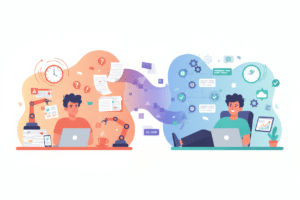

The Impact of No-Code Automation on Employee Upskilling
The digital age has ushered in a wave of innovations, reshaping how businesses operate. Among these advancements, no-code automation is emerging as a game-changer. But what does this mean for employee development? Let’s explore the profound impact of no-code tools on upskilling in the workplace.
| Table of Contents |
| 1. Understanding No-Code Automation |
| 2. Empowering Employees through No-Code Tools |
| 3. The Upskilling Revolution |
| 4. Challenges in Upskilling with No-Code |
| 5. Conclusion |
| 6. FAQs |
Understanding No-Code Automation
No-code automation tools are platforms that allow users to create applications through graphical user interfaces rather than traditional hand-coded programming. This innovation is making technology accessible to everyone, not just IT experts. By eliminating the need for extensive coding knowledge, no-code platforms democratize software development, enabling employees to automate tasks and streamline processes with ease.
Empowering Employees through No-Code Tools
Imagine being able to design a workflow without writing a single line of code. That’s the magic of no-code automation! These tools empower employees to solve problems independently, fostering a culture of innovation and self-reliance.
For example, a marketing professional can automate email campaigns or set up customer-focused workflows. This not only saves time but also enhances productivity, allowing teams to focus on more strategic tasks. 🚀
The Upskilling Revolution
With no-code tools, employees are not just passive users; they become active creators. This shift has a direct impact on upskilling:
1. Developing New Skills: Employees learn how to use these platforms, enhancing their technical literacy and problem-solving abilities. This knowledge can be applied across various projects, increasing their value within the organization.
2. Cross-Department Collaboration: No-code tools facilitate collaboration between departments, as non-technical staff can now contribute to tech-based projects. This breaks silos and encourages a more integrated work environment.
3. Boosting Career Growth: As employees gain new competencies, they become more competitive in the job market, opening doors to new career opportunities.
Challenges in Upskilling with No-Code
While the benefits are clear, the journey to upskilling with no-code automation isn’t without challenges:
1. Initial Resistance: Some employees may resist change, preferring traditional methods over new technologies. Overcoming this requires effective change management and training programs.
2. Overdependence on Tools: While no-code tools are powerful, it’s crucial to balance their use with foundational knowledge. Employees should understand the basics of what’s happening behind the scenes to avoid over-reliance.
3. Security Concerns: As more employees engage with these tools, ensuring data security and compliance becomes critical. Organizations must implement robust security measures to safeguard information.
Conclusion
No-code automation is transforming the workplace, offering unprecedented opportunities for employee upskilling. By embracing these tools, businesses not only improve efficiency but also empower their workforce, driving innovation and growth. The future is bright for those willing to adapt and learn. 🌟
FAQs
Q: What is no-code automation?
A: No-code automation refers to platforms that allow users to create applications without traditional coding, using graphical interfaces instead.
Q: How does no-code automation impact employee upskilling?
A: It enables employees to learn new skills, collaborate across departments, and enhance their career prospects by becoming proficient in tech-based tools.
Q: What are some challenges associated with no-code upskilling?
A: Challenges include resistance to change, overdependence on tools, and ensuring data security and compliance.
Q: Can no-code tools replace traditional coding?
A: While they simplify many tasks, no-code tools are not a complete replacement for traditional coding, especially for complex software development.
Click Here For More Details