How No-Code Workflow Automation is Revolutionizing Manufacturing 🏭
Remember when automating a simple manufacturing process required months of coding, expensive consultants, and a small army of IT professionals? Those days are becoming ancient history. Today’s manufacturing landscape is experiencing a seismic shift thanks to no-code workflow automation platforms that are putting the power of digital transformation directly into the hands of plant managers, quality engineers, and operations teams.
The manufacturing industry, traditionally slow to embrace new technologies, is now racing to adopt no-code solutions that promise faster implementation, lower costs, and unprecedented flexibility. But what exactly is driving this revolution, and how are smart manufacturers leveraging these tools to stay competitive in an increasingly digital world?
Table of Contents 📋
• Understanding No-Code Workflow Automation in Manufacturing
• Key Benefits Transforming Manufacturing Operations
• Real-World Applications Across Manufacturing Processes
• Implementation Strategies for Maximum Impact
• Overcoming Common Challenges and Obstacles
• Future Trends and Emerging Opportunities
• Getting Started with No-Code Manufacturing Automation
Understanding No-Code Workflow Automation in Manufacturing 🔧
No-code workflow automation represents a paradigm shift from traditional programming approaches to visual, drag-and-drop interfaces that enable non-technical users to create sophisticated automated processes. In manufacturing contexts, this means production managers can design workflows that automatically trigger quality checks, send maintenance alerts, update inventory systems, and coordinate between different departments—all without writing a single line of code.
Think of it as building with digital Lego blocks instead of constructing from raw materials. Each block represents a specific function: “when inventory drops below X units,” “send email to supplier,” “update production schedule,” or “generate quality report.” Users simply connect these blocks in logical sequences to create powerful automated workflows that would have previously required extensive custom development.
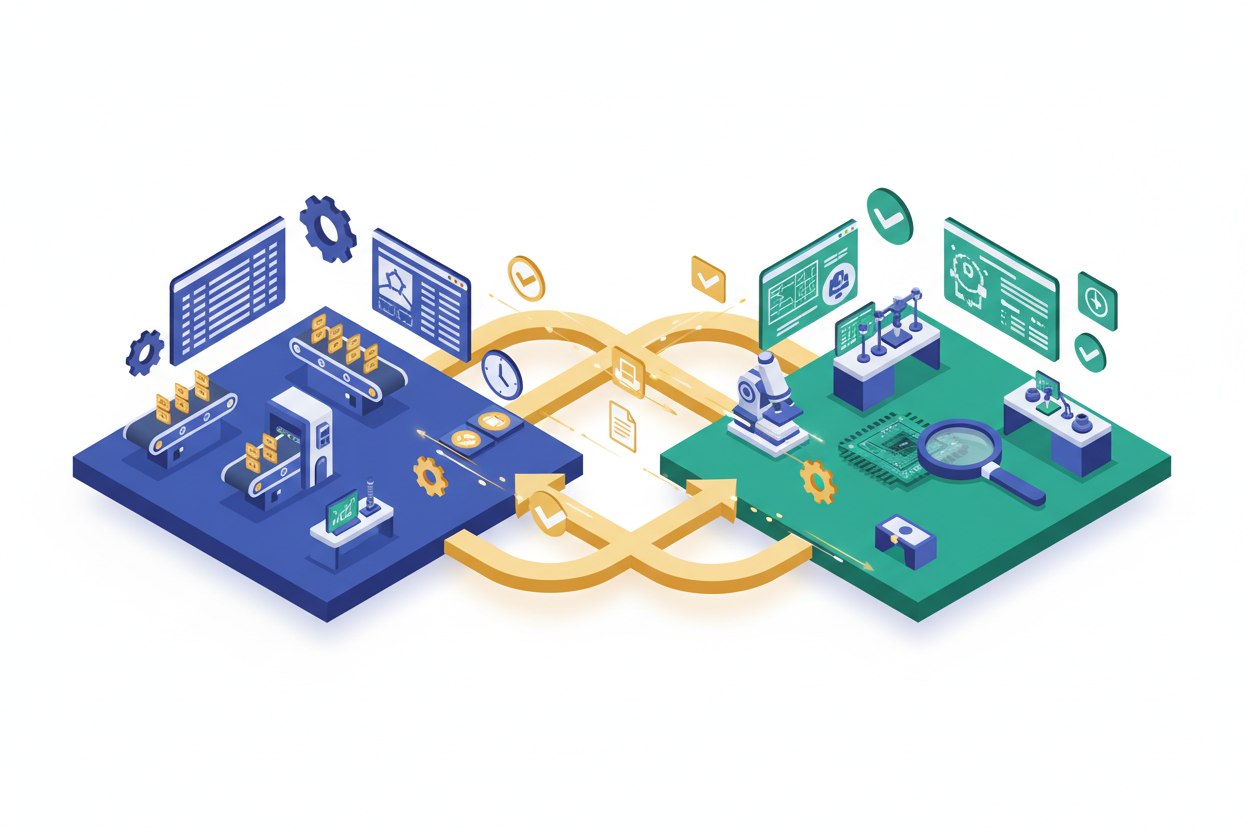
The beauty of no-code platforms lies in their ability to democratize automation. While traditional manufacturing automation required specialized programming knowledge and significant IT resources, no-code solutions empower domain experts—the people who actually understand the manufacturing processes—to build and modify automation workflows themselves.
Key Benefits Transforming Manufacturing Operations ⚡
Accelerated Digital Transformation Timeline
Manufacturing companies are discovering they can implement automation solutions in weeks rather than months or years. A automotive parts manufacturer recently shared how they automated their entire quality control documentation process in just three days using a no-code platform, compared to the six-month timeline their IT department had originally projected for a custom solution.
This speed advantage becomes crucial when dealing with rapidly changing market conditions, new regulatory requirements, or sudden shifts in customer demand. Companies can quickly adapt their workflows without waiting for lengthy development cycles or expensive consultant engagements.
Significant Cost Reduction and ROI Improvement
Traditional automation projects often require substantial upfront investments in custom software development, specialized hardware, and ongoing maintenance contracts. No-code platforms typically operate on subscription models with much lower entry costs and faster time-to-value.
A mid-sized electronics manufacturer reported saving over $200,000 in their first year by replacing multiple custom applications with integrated no-code workflows. They eliminated licensing fees for several specialized software packages while gaining more functionality and flexibility than their previous solutions provided.
Enhanced Operational Flexibility and Agility
Manufacturing environments are inherently dynamic, with frequent changes in product specifications, supplier relationships, regulatory requirements, and customer demands. No-code platforms enable rapid workflow modifications without the traditional bottlenecks of IT approval processes and development cycles.
When COVID-19 disrupted global supply chains, manufacturers using no-code automation could quickly modify their procurement workflows, adjust inventory thresholds, and implement new safety protocols—often within hours rather than weeks.
Real-World Applications Across Manufacturing Processes 🏗️
Quality Management and Compliance Automation
Quality control processes generate enormous amounts of data that traditionally required manual entry, review, and reporting. No-code platforms are transforming these workflows by automatically capturing inspection data, triggering corrective actions when quality thresholds are exceeded, and generating compliance reports for regulatory bodies.
A pharmaceutical manufacturer implemented a no-code quality management workflow that automatically routes non-conformance reports to appropriate personnel based on severity levels, tracks corrective action progress, and ensures all documentation meets FDA requirements. The system reduced their average incident response time from 72 hours to just 4 hours while improving documentation accuracy by 95%.
Supply Chain and Inventory Optimization
Modern manufacturing depends on complex supply chains with multiple vendors, varying lead times, and fluctuating demand patterns. No-code automation enables sophisticated inventory management workflows that automatically reorder materials based on production schedules, track supplier performance, and optimize warehouse operations.
One furniture manufacturer created a no-code workflow that monitors raw material consumption rates, automatically generates purchase orders when inventory levels drop below safety thresholds, and sends delivery confirmations to production planning teams. This automation reduced stockouts by 80% while decreasing excess inventory carrying costs by 25%.
Maintenance and Asset Management
Predictive maintenance strategies rely on continuous monitoring and data analysis to prevent equipment failures before they occur. No-code platforms excel at creating workflows that collect sensor data, analyze trends, schedule maintenance activities, and coordinate repair teams.
A steel manufacturing plant implemented a no-code maintenance workflow that monitors vibration sensors on critical equipment, automatically creates work orders when anomalies are detected, and schedules maintenance during planned downtime windows. This proactive approach reduced unplanned downtime by 40% and extended equipment life by an average of 18 months.
Implementation Strategies for Maximum Impact 📊
Start Small and Scale Gradually
Successful no-code automation implementations typically begin with pilot projects that address specific pain points rather than attempting comprehensive digital transformation from day one. Identify processes that are currently manual, time-consuming, and prone to errors—these represent ideal candidates for initial automation efforts.
Focus on workflows that involve multiple departments or systems, as these often provide the highest return on investment. A simple example might be automating the handoff between production scheduling and quality control departments, ensuring that inspection requirements are automatically communicated and tracked.
Engage Cross-Functional Teams
The most effective no-code implementations involve collaboration between operations personnel who understand the processes and IT teams who can provide technical guidance and ensure proper integration with existing systems. This partnership ensures that automated workflows are both practically useful and technically sound.
Create dedicated automation teams that include representatives from each affected department. These teams can identify automation opportunities, design workflows, and serve as change champions within their respective areas.
Overcoming Common Challenges and Obstacles 🚧
Integration with Legacy Systems
Many manufacturing facilities rely on older ERP systems, MES platforms, and specialized equipment that weren’t designed for modern integration approaches. While this can present challenges, most no-code platforms offer robust integration capabilities through APIs, database connections, and file-based data exchange.
The key is working with vendors who understand manufacturing environments and can provide pre-built connectors for common industrial systems. Some platforms specialize in manufacturing applications and offer ready-made integrations for popular ERP systems like SAP, Oracle, and Microsoft Dynamics.
Change Management and User Adoption
Resistance to new technology is natural, especially in manufacturing environments where established processes have worked reliably for years. Successful implementations focus on demonstrating clear value and involving end users in the design process.
Provide comprehensive training that emphasizes how automation will make jobs easier and more interesting rather than threatening job security. Many workers discover that automation eliminates tedious manual tasks, allowing them to focus on higher-value activities like process improvement and problem-solving.
Future Trends and Emerging Opportunities 🚀
The convergence of no-code platforms with emerging technologies like artificial intelligence, machine learning, and IoT sensors is creating unprecedented opportunities for manufacturing automation. We’re seeing the emergence of no-code AI tools that can predict equipment failures, optimize production schedules, and identify quality issues without requiring data science expertise.
Edge computing integration is another exciting development, enabling no-code workflows to process data directly on manufacturing equipment rather than relying on cloud connectivity. This approach reduces latency, improves reliability, and enables real-time decision-making in critical production processes.
The growing ecosystem of no-code platforms is also driving standardization and interoperability, making it easier to connect different automation tools and create comprehensive digital manufacturing environments.
Getting Started with No-Code Manufacturing Automation 🎯
Begin your no-code automation journey by conducting a thorough assessment of current manual processes and identifying quick wins that can demonstrate value to stakeholders. Look for repetitive tasks that involve data entry, status updates, or coordination between different systems or departments.
Evaluate no-code platforms based on their manufacturing-specific features, integration capabilities, scalability, and vendor support. Many platforms offer free trials or pilot programs that allow you to test functionality with real workflows before making significant investments.
Consider partnering with experienced implementation consultants who specialize in manufacturing automation. While no-code platforms are designed for non-technical users, expert guidance can accelerate implementation timelines and help avoid common pitfalls.
Conclusion: Embracing the No-Code Manufacturing Revolution 🌟
No-code workflow automation represents more than just a new technology trend—it’s a fundamental shift toward democratized digital transformation that puts automation power directly into the hands of manufacturing professionals who understand their processes best. Companies that embrace this revolution are discovering they can achieve faster implementation timelines, lower costs, and greater operational flexibility than traditional automation approaches ever provided.
The manufacturing industry stands at an inflection point where competitive advantage increasingly depends on the ability to rapidly adapt and optimize operations. No-code platforms provide the tools necessary to achieve this agility while maintaining the reliability and precision that manufacturing demands.
As these platforms continue to evolve and integrate with emerging technologies, early adopters will find themselves well-positioned to capitalize on new opportunities and navigate future challenges. The question isn’t whether no-code automation will transform manufacturing—it’s whether your organization will lead or follow this inevitable transformation.
Frequently Asked Questions ❓
What types of manufacturing processes are best suited for no-code automation?
Repetitive processes involving data collection, status updates, approvals, and coordination between departments or systems work exceptionally well with no-code automation. Quality control workflows, inventory management, maintenance scheduling, and compliance reporting are particularly good candidates.
How long does it typically take to implement no-code automation in manufacturing?
Simple workflows can often be implemented within days or weeks, while more complex integrations might take several months. The timeline depends on the complexity of existing systems, the scope of automation, and the level of customization required.
Do I need technical expertise to use no-code platforms effectively?
While no-code platforms are designed for non-technical users, some basic understanding of process logic and data flow is helpful. Most platforms provide extensive training resources and support to help users become proficient quickly.
Can no-code automation integrate with existing manufacturing software like ERP and MES systems?
Yes, most modern no-code platforms offer robust integration capabilities through APIs, database connections, and file-based data exchange. Many platforms provide pre-built connectors for popular manufacturing software systems.
What are the security considerations for no-code automation in manufacturing?
Security is crucial in manufacturing environments. Look for platforms that offer enterprise-grade security features including data encryption, role-based access controls, audit trails, and compliance with industry standards like ISO 27001.
How much can manufacturers expect to save by implementing no-code automation?
Cost savings vary significantly based on the scope of implementation and current process efficiency. Many manufacturers report 20-50% reductions in process completion times and 30-70% decreases in manual errors, leading to substantial operational cost savings.
Click Here For More Details