How to Use No-Code Tools to Automate Social Media Management: A Complete Guide for Busy Entrepreneurs 🚀
Table of Contents
1. Introduction: The Social Media Overwhelm
2. What Are No-Code Tools and Why They Matter
3. Top No-Code Platforms for Social Media Automation
4. Essential Automations Every Business Should Set Up
5. Step-by-Step Guide to Creating Your First Automation
6. Best Practices for Social Media Automation
7. Common Mistakes to Avoid
8. Measuring Success and ROI
9. Conclusion
10. Frequently Asked Questions
Introduction: The Social Media Overwhelm 📱
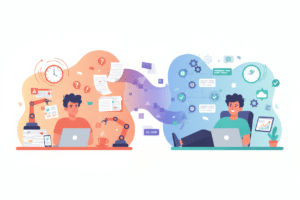
Let’s be honest – managing social media can feel like trying to juggle flaming torches while riding a unicycle. One minute you’re crafting the perfect Instagram caption, the next you’re scrambling to respond to comments on Facebook, and before you know it, you’ve forgotten to post on LinkedIn for three weeks straight.

If this sounds familiar, you’re not alone. Recent studies show that small business owners spend an average of 3-5 hours daily on social media management. That’s nearly a full workday just keeping up with posts, engagement, and monitoring!
But here’s the good news: no-code automation tools are revolutionizing how we handle social media management. These powerful platforms allow anyone – regardless of technical expertise – to create sophisticated workflows that handle repetitive tasks automatically. Think of it as having a digital assistant that never sleeps, never takes breaks, and never forgets to post your content.
What Are No-Code Tools and Why They Matter 🛠️
No-code tools are software platforms that enable users to build applications, workflows, and automations without writing a single line of code. Instead of complex programming languages, these tools use intuitive drag-and-drop interfaces, visual builders, and simple logic statements that anyone can understand.
For social media management, this means you can create sophisticated automation systems that would have previously required hiring a developer or learning complex coding skills. These tools have democratized automation, putting powerful capabilities directly into the hands of business owners, marketers, and content creators.

The beauty of no-code platforms lies in their accessibility. Whether you’re a tech-savvy entrepreneur or someone who still asks their teenager to fix the WiFi, these tools are designed with user-friendliness in mind. Most platforms offer templates, tutorials, and community support to help you get started quickly.
Top No-Code Platforms for Social Media Automation 🌟
The no-code landscape is rich with options, but some platforms stand out for social media automation. Zapier remains the gold standard, connecting over 5,000 apps and services with simple trigger-action workflows. If this happens, then do that – it’s really that straightforward.
Make (formerly Integromat) offers more advanced features for users who want deeper customization. Its visual scenario builder allows for complex, multi-step automations that can handle sophisticated social media workflows. Think of it as Zapier’s more technical cousin.
IFTTT (If This Then That) focuses on simplicity and is perfect for beginners. While it may not have all the bells and whistles of other platforms, its ease of use makes it an excellent starting point for automation newcomers.
Buffer and Hootsuite, while primarily scheduling tools, also offer automation features that integrate well with other no-code platforms. These can serve as central hubs for your social media operations.
Essential Automations Every Business Should Set Up ⚡
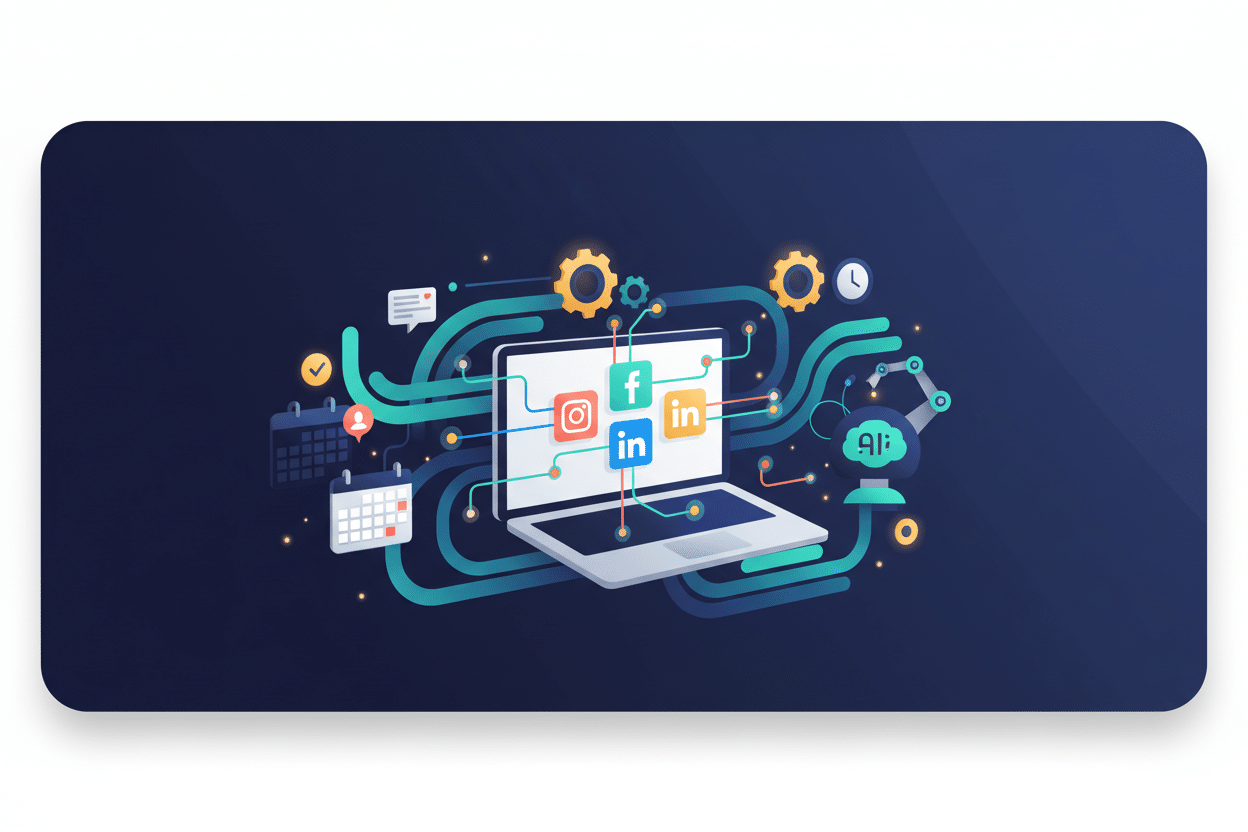
Content scheduling automation should be your first priority. Set up workflows that automatically publish your blog posts to multiple social media platforms when they go live on your website. This ensures consistent cross-platform promotion without manual intervention.
Engagement monitoring is another crucial automation. Create systems that notify you immediately when someone mentions your brand, leaves a review, or sends a direct message. Quick response times significantly impact customer satisfaction and brand perception.
Lead generation automations can transform your social media presence into a powerful sales tool. Set up workflows that automatically add engaged followers to your email list, send welcome messages to new followers, or trigger follow-up sequences based on specific interactions.
Content curation automations help maintain an active social presence even when you’re busy with other aspects of your business. These can automatically share relevant industry news, repost user-generated content, or cross-promote content between different platforms.
Step-by-Step Guide to Creating Your First Automation 📋
Let’s walk through creating a simple but powerful automation: automatically posting new blog articles to your social media accounts. This example uses Zapier, but the principles apply to most no-code platforms.
Start by identifying your trigger – the event that starts your automation. In this case, it’s publishing a new blog post. Most blogging platforms like WordPress, Medium, or Ghost can serve as triggers when new content is published.
Next, define your actions – what should happen when the trigger fires. You might want to post to Twitter with the article title and link, share to LinkedIn with a professional summary, and add to Facebook with an engaging question to encourage discussion.
Configure each action step by connecting your social media accounts and customizing the post content. Use dynamic fields to automatically pull the article title, excerpt, and featured image. Add relevant hashtags and mentions to maximize reach.
Test your automation thoroughly before going live. Most platforms offer testing features that let you see exactly what will happen without actually posting to your social accounts. This prevents embarrassing mistakes and ensures everything works as expected.
Best Practices for Social Media Automation 💡
Maintain authenticity even with automation. Your automated posts should sound like they came from a human, not a robot. Use varied language, include personal touches, and avoid overly promotional content that screams “automated.”
Timing is everything in social media. Research when your audience is most active and schedule your automations accordingly. Different platforms have different peak times, so customize your posting schedule for each network.
Don’t automate everything. While automation handles repetitive tasks beautifully, genuine human interaction remains crucial for building relationships. Reserve real-time engagement, customer service responses, and community building for manual handling.
Regular monitoring and adjustment keep your automations effective. Social media trends change rapidly, and what works today might not work tomorrow. Review your automation performance monthly and adjust strategies based on engagement metrics and platform algorithm changes.
Common Mistakes to Avoid ⚠️
Over-automation is perhaps the biggest pitfall. When every single post, like, and comment is automated, your brand loses its human touch. Followers can usually tell when they’re interacting with a bot, and it doesn’t create positive brand experiences.
Ignoring platform-specific best practices can hurt your automation effectiveness. What works on Twitter doesn’t necessarily work on LinkedIn. Each platform has its own culture, optimal post formats, and audience expectations.
Failing to monitor automated content can lead to embarrassing situations. Imagine your cheerful promotional post going live during a crisis or tragedy. Always include manual oversight in your automation strategy.
Setting up automations without clear goals often leads to busy work rather than meaningful results. Before creating any automation, define what success looks like and how you’ll measure it.
Measuring Success and ROI 📊
Track time savings as your primary ROI metric. Calculate how many hours per week you spent on social media management before automation, then compare it to your current time investment. Most businesses see 60-80% time reduction while maintaining or improving their social media presence.
Monitor engagement metrics to ensure automation isn’t hurting your social media performance. Track likes, comments, shares, and click-through rates before and after implementing automation. Quality engagement should remain steady or improve.
Measure lead generation and conversion improvements. Automated lead nurturing and follow-up sequences often perform better than manual processes because they’re more consistent and timely. Track how many leads your automated systems generate and convert.
Calculate the opportunity cost of manual social media management. The time you save through automation can be redirected toward high-value activities like product development, customer service, or strategic planning. This indirect ROI often provides the greatest business impact.
Conclusion 🎯
Social media automation through no-code tools isn’t just a nice-to-have anymore – it’s becoming essential for businesses that want to maintain a strong online presence without sacrificing other important activities. The technology has matured to the point where anyone can create sophisticated, professional-grade automations without technical expertise.
Remember, the goal isn’t to remove the human element from your social media presence, but rather to free up your time so you can focus on the interactions and content that truly require a personal touch. When implemented thoughtfully, automation enhances rather than replaces human connection.
Start small with one or two simple automations, measure their impact, and gradually expand your automated workflows as you become more comfortable with the tools. The time investment in setting up these systems pays dividends in the long run, giving you back hours each week to focus on growing your business.
The future of social media management is automated, efficient, and surprisingly human. By embracing no-code tools today, you’re not just saving time – you’re positioning your business for sustainable growth in an increasingly digital world.
Frequently Asked Questions 🤔
Q: How much do no-code automation tools typically cost?
A: Most no-code platforms offer free tiers with basic functionality. Paid plans typically range from $10-50 per month for small businesses, with pricing based on the number of automations and data transfers you need.
Q: Can I automate responses to customer service inquiries?
A: While you can set up automated acknowledgment messages, avoid fully automating customer service responses. Use automation for initial responses and routing, but ensure human follow-up for actual problem-solving.
Q: Will social media platforms ban my account for using automation?
A: Legitimate automation tools that comply with platform APIs are generally safe. Avoid tools that require your password or violate platform terms of service. Stick to official integrations and approved third-party services.
Q: How long does it take to set up effective social media automation?
A: Simple automations can be set up in 15-30 minutes. More complex workflows might take several hours initially, but the time investment pays off quickly through ongoing time savings.
Q: Should I automate posting on all social media platforms?
A: Not necessarily. Each platform has different audiences and optimal posting strategies. Start with 1-2 platforms where your audience is most active, then expand gradually as you refine your approach.
Click Here For More Details