
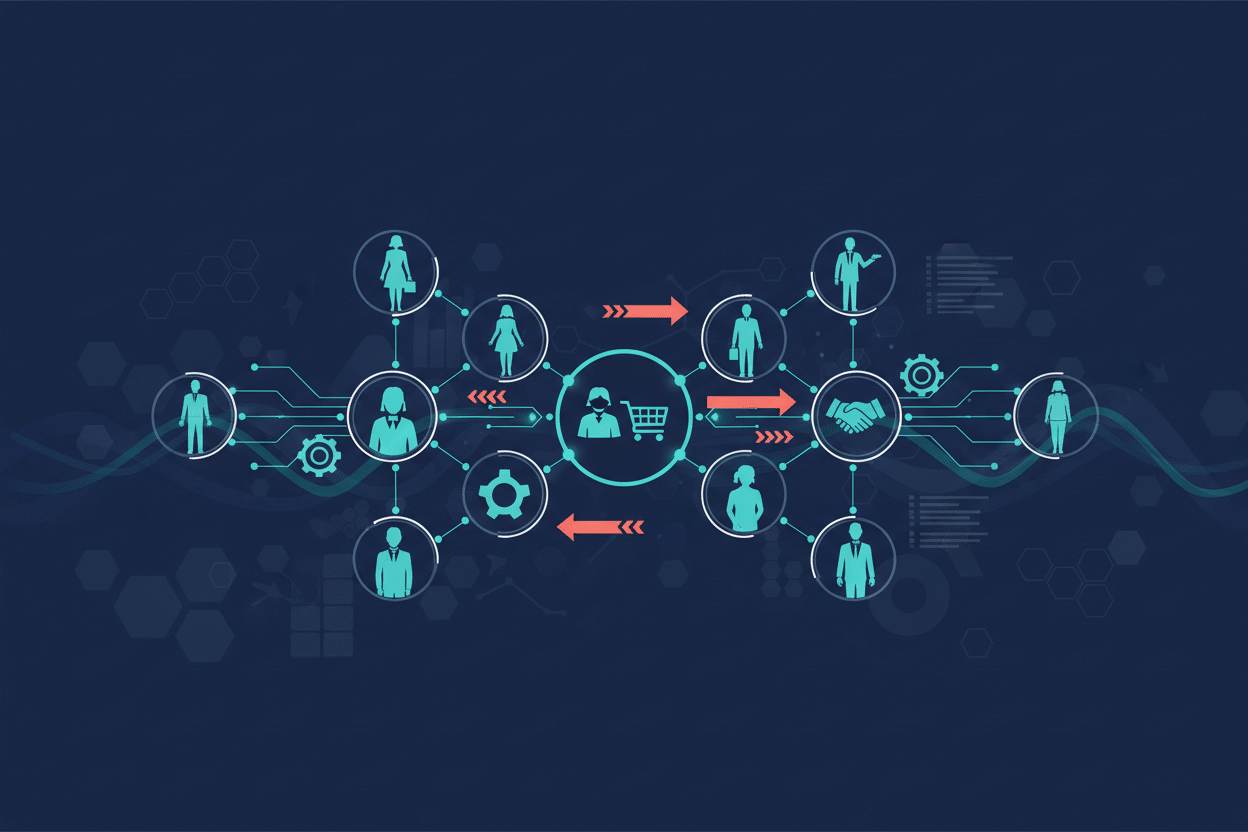
The Role of No-Code Automation in Enhancing Stakeholder Engagement: A Game-Changer for Modern Businesses 🚀
Table of Contents
• Introduction to No-Code Automation and Stakeholder Engagement
• Understanding No-Code Automation Platforms
• The Current Challenges in Stakeholder Engagement
• How No-Code Automation Transforms Stakeholder Communication
• Key Benefits of Automated Stakeholder Engagement
• Real-World Applications and Use Cases
• Best Practices for Implementation
• Overcoming Common Implementation Challenges
• Future Trends in No-Code Automation
• Conclusion
• Frequently Asked Questions
Introduction: Why No-Code Automation is Revolutionizing Stakeholder Engagement
Picture this: It’s Monday morning, and instead of drowning in a sea of emails, status update requests, and meeting invitations, you’re sipping your coffee while automated workflows seamlessly keep all your stakeholders informed, engaged, and satisfied. Sounds like a dream? Well, thanks to no-code automation, this dream is rapidly becoming reality for businesses worldwide. 💫
In today’s fast-paced business environment, maintaining meaningful relationships with stakeholders—whether they’re investors, customers, employees, or partners—has become more complex than ever. The traditional approach of manual communication, sporadic updates, and reactive engagement strategies simply doesn’t cut it anymore. Enter no-code automation: a powerful solution that’s transforming how organizations connect with their most important audiences.
This comprehensive guide explores how no-code automation platforms are revolutionizing stakeholder engagement, making it more efficient, personalized, and impactful than ever before. We’ll dive deep into practical applications, real-world benefits, and actionable strategies you can implement today.
Understanding No-Code Automation Platforms
Before we explore the magic of enhanced stakeholder engagement, let’s establish what no-code automation actually means. Simply put, no-code automation platforms allow users to create sophisticated workflows, applications, and processes without writing a single line of code. Think of them as digital LEGO blocks—you can build complex structures by connecting simple, pre-designed components.
Popular platforms like Zapier, Microsoft Power Automate, Airtable, and Notion have democratized automation, putting powerful tools into the hands of business users who previously relied entirely on IT departments. These platforms use intuitive drag-and-drop interfaces, visual workflow builders, and pre-built templates that make automation accessible to everyone.
The beauty of no-code automation lies in its simplicity and speed. What once took weeks of development and significant technical expertise can now be accomplished in hours by anyone with basic computer skills. This accessibility has opened up unprecedented opportunities for improving stakeholder engagement across all business functions.
The Current Challenges in Stakeholder Engagement
Let’s be honest—traditional stakeholder engagement is often a nightmare of inefficiency. Organizations typically struggle with several persistent challenges that no-code automation directly addresses.
First, there’s the communication chaos. Stakeholders receive information through multiple channels—emails, phone calls, meetings, reports—often leading to confusion, duplication, and important details falling through the cracks. I’ve witnessed countless situations where critical stakeholders were left out of important updates simply because someone forgot to add them to an email chain.
Second, timing issues plague most engagement strategies. Manual processes mean updates are often delayed, irregular, or reactive rather than proactive. By the time stakeholders receive information, it may already be outdated or irrelevant to their current needs.
Third, personalization remains a significant challenge. Different stakeholders have varying interests, preferences, and information needs. Investors want financial metrics, customers care about product updates, and employees need operational information. Creating tailored communications manually is time-consuming and often inconsistent.
Finally, tracking and measuring engagement effectiveness is nearly impossible with traditional methods. Without proper analytics and feedback mechanisms, organizations operate blindly, unsure whether their stakeholder engagement efforts are actually working.
How No-Code Automation Transforms Stakeholder Communication
No-code automation addresses these challenges head-on by creating systematic, intelligent, and scalable engagement processes. The transformation happens across multiple dimensions, fundamentally changing how organizations interact with their stakeholders.
Automated workflows eliminate the human error factor that often derails communication efforts. When a project milestone is reached, stakeholders automatically receive relevant updates. When a customer submits feedback, it’s instantly routed to the appropriate team members. These automated triggers ensure consistency and reliability in stakeholder communication.
Smart segmentation becomes effortless with no-code platforms. You can create dynamic groups based on stakeholder types, interests, engagement history, or any other relevant criteria. This segmentation enables highly targeted communication that resonates with each audience segment’s specific needs and preferences.
Real-time data integration means stakeholders receive the most current information available. No-code platforms can pull data from multiple sources—CRM systems, project management tools, financial databases—and automatically compile comprehensive, up-to-date reports and dashboards.
Multi-channel orchestration ensures stakeholders receive information through their preferred communication channels, whether that’s email, SMS, Slack notifications, or mobile app push notifications. The same message can be automatically formatted and delivered across multiple platforms simultaneously.
Key Benefits of Automated Stakeholder Engagement
The benefits of implementing no-code automation for stakeholder engagement extend far beyond simple time savings. Organizations that embrace these tools typically experience transformational improvements across multiple areas.
Enhanced transparency becomes a natural outcome when information flows automatically and consistently. Stakeholders gain unprecedented visibility into organizational activities, progress, and challenges. This transparency builds trust and reduces the anxiety that comes from being left in the dark about important developments.
Improved response times dramatically enhance stakeholder satisfaction. Automated acknowledgments, status updates, and follow-up communications ensure stakeholders feel heard and valued. Instead of waiting days for responses, they receive immediate confirmation and regular progress updates.
Increased engagement frequency becomes sustainable when automation handles the heavy lifting. Organizations can maintain regular touchpoints with stakeholders without overwhelming their teams. Weekly updates, monthly reports, and quarterly reviews happen automatically, maintaining consistent engagement rhythms.
Data-driven insights emerge naturally from automated systems. Every interaction, click, and response is captured and analyzed, providing valuable intelligence about stakeholder preferences, engagement patterns, and communication effectiveness. This data enables continuous improvement and optimization of engagement strategies.
Cost efficiency improves significantly as automation reduces the manual labor required for stakeholder management. Teams can focus on high-value activities like strategic planning and relationship building rather than administrative tasks like sending routine updates and compiling reports.
Real-World Applications and Use Cases
The practical applications of no-code automation in stakeholder engagement are virtually limitless. Let me share some compelling examples that illustrate the transformative potential of these tools.
Project stakeholder management represents one of the most impactful use cases. Automated workflows can track project milestones, budget changes, and timeline adjustments, instantly notifying relevant stakeholders when significant events occur. Team members receive task assignments and deadline reminders, while executives get high-level progress summaries, and clients receive customer-friendly updates about deliverables.
Investor relations automation streamlines one of the most critical stakeholder relationships for many organizations. Automated systems can compile financial data, generate investor reports, schedule regular communications, and even trigger alerts when key performance indicators reach predefined thresholds. This ensures investors stay informed and confident in the organization’s management.
Customer engagement automation creates seamless experiences that delight customers while reducing support workload. New customers automatically receive onboarding sequences, existing customers get product updates and feature announcements, and at-risk customers trigger retention workflows. The entire customer journey becomes orchestrated and optimized for maximum satisfaction.
Employee engagement automation addresses internal stakeholder needs through automated onboarding processes, regular check-ins, performance review reminders, and company-wide announcements. New hires receive structured welcome sequences, while existing employees get personalized development opportunities and recognition programs.
Vendor and partner management becomes streamlined through automated contract renewals, performance monitoring, and communication scheduling. Partners receive regular updates about program changes, new opportunities, and performance metrics without requiring manual intervention from account managers.
Best Practices for Implementation
Successfully implementing no-code automation for stakeholder engagement requires thoughtful planning and execution. Having guided numerous organizations through this transformation, I’ve identified several critical best practices that determine success or failure.
Start with stakeholder mapping and needs analysis. Before building any automated workflows, thoroughly understand who your stakeholders are, what information they need, when they need it, and how they prefer to receive it. This foundation ensures your automation efforts address real needs rather than creating sophisticated solutions to non-existent problems.
Begin with simple, high-impact workflows rather than attempting to automate everything at once. Choose processes that are currently manual, repetitive, and time-consuming but relatively straightforward to automate. Early wins build confidence and demonstrate value, making it easier to secure support for more complex automation initiatives.
Maintain the human touch even within automated systems. While automation handles routine communications and data distribution, ensure there are still opportunities for personal interaction and relationship building. The goal is to enhance human connections, not replace them entirely.
Design for scalability from the beginning. As your organization grows and stakeholder needs evolve, your automation systems should be able to adapt and expand. Choose platforms and design workflows that can accommodate future requirements without requiring complete rebuilds.
Implement robust testing and feedback mechanisms. Before fully deploying automated workflows, test them thoroughly with small stakeholder groups. Collect feedback, identify issues, and refine the processes. Continuous improvement should be built into your automation strategy from day one.
Overcoming Common Implementation Challenges
While no-code automation offers tremendous benefits, implementation isn’t without its challenges. Understanding and preparing for these obstacles significantly increases your chances of success.
Resistance to change represents the most common hurdle. Stakeholders who are comfortable with existing communication patterns may be skeptical of automated systems. Address this through clear communication about benefits, gradual rollouts, and extensive support during the transition period. Show, don’t just tell, how automation will improve their experience.
Data quality and integration issues can derail even the best-designed automation workflows. Ensure your data sources are clean, consistent, and properly connected before building automated processes. Garbage in, garbage out applies especially to automated systems that can amplify data problems at scale.
Over-automation poses a significant risk that many organizations overlook. Not every communication needs to be automated, and some stakeholder interactions require human judgment and empathy. Maintain balance between efficiency and personal connection.
Security and privacy concerns must be addressed proactively, especially when dealing with sensitive stakeholder information. Ensure your no-code platforms comply with relevant regulations and implement appropriate access controls and data protection measures.
Platform limitations can constrain your automation ambitions. While no-code tools are powerful, they may not handle every edge case or complex requirement. Plan for these limitations and have strategies for addressing them, whether through platform combinations or selective custom development.
Future Trends in No-Code Automation
The no-code automation landscape continues evolving rapidly, with exciting developments that will further enhance stakeholder engagement capabilities. Understanding these trends helps organizations prepare for the future and make informed technology decisions.
Artificial intelligence integration is becoming standard in no-code platforms, enabling smarter automation that adapts to stakeholder behavior and preferences. AI-powered systems can optimize communication timing, personalize content, and even predict stakeholder needs before they’re explicitly expressed.
Advanced analytics and predictive capabilities are emerging, allowing organizations to anticipate stakeholder concerns and proactively address them. These systems can identify engagement patterns, predict churn risks, and recommend intervention strategies.
Cross-platform integration continues improving, making it easier to create seamless workflows that span multiple tools and systems. The future promises even more sophisticated integration capabilities that break down data silos and create truly unified stakeholder experiences.
Mobile-first automation is gaining prominence as stakeholders increasingly expect to interact with organizations through mobile devices. No-code platforms are developing better mobile capabilities and native app integration options.
Conclusion: Embracing the Future of Stakeholder Engagement 🎯
No-code automation represents a fundamental shift in how organizations approach stakeholder engagement. By democratizing powerful automation capabilities, these platforms enable businesses of all sizes to create sophisticated, personalized, and efficient engagement strategies that were previously only available to large enterprises with significant technical resources.
The benefits are clear: improved transparency, faster response times, increased engagement frequency, better data insights, and significant cost savings. More importantly, no-code automation allows organizations to build stronger, more meaningful relationships with their stakeholders by ensuring consistent, relevant, and timely communication.
As we look toward the future, the organizations that embrace no-code automation for stakeholder engagement will have significant competitive advantages. They’ll be more agile, more responsive, and more capable of maintaining strong stakeholder relationships at scale.
The question isn’t whether you should implement no-code automation for stakeholder engagement—it’s how quickly you can get started. Begin with small, manageable projects, learn from the experience, and gradually expand your automation capabilities. Your stakeholders will thank you, and your organization will reap the benefits for years to come.
Remember, the goal isn’t to replace human connection with automation—it’s to use automation to enable more meaningful human connections. When routine communications are handled automatically, your team can focus on building relationships, solving complex problems, and creating value for all stakeholders. That’s the true power of no-code automation in stakeholder engagement. ✨
Frequently Asked Questions
What is no-code automation and how does it differ from traditional programming?
No-code automation allows users to create automated workflows and applications using visual interfaces and pre-built components, without writing code. Unlike traditional programming, which requires technical expertise and significant development time, no-code platforms enable business users to build automation solutions quickly using drag-and-drop tools and templates.
Which stakeholders benefit most from automated engagement systems?
All stakeholder types benefit from automated engagement, but the impact varies. Investors appreciate consistent financial reporting and milestone updates. Customers enjoy timely product updates and personalized communications. Employees benefit from streamlined onboarding and regular check-ins. Partners and vendors value automated contract management and performance tracking.
How much time can organizations save by implementing no-code automation for stakeholder engagement?
Time savings vary significantly based on current processes and implementation scope, but organizations typically report 40-70% reduction in time spent on routine stakeholder communications. This translates to several hours per week for small teams and potentially hundreds of hours monthly for larger organizations.
What are the security considerations when using no-code platforms for stakeholder data?
Security considerations include data encryption, access controls, compliance with regulations like GDPR or HIPAA, regular security audits, and vendor security assessments. Choose platforms with robust security features and ensure proper user permissions and data handling procedures are implemented.
Can no-code automation platforms integrate with existing business systems?
Yes, most modern no-code platforms offer extensive integration capabilities with popular business systems including CRM platforms, project management tools, financial software, and communication platforms. Many provide pre-built connectors and APIs that simplify integration processes.
What’s the typical learning curve for implementing no-code automation?
Most business users can create basic automated workflows within a few hours of training. More complex implementations may require several days or weeks to master, but this is still significantly faster than traditional development approaches. The visual nature of no-code platforms makes them intuitive for most users.
How do you measure the success of automated stakeholder engagement initiatives?
Success metrics include stakeholder satisfaction scores, engagement rates (email opens, click-throughs), response times, communication frequency consistency, time savings, cost reduction, and stakeholder retention rates. Most no-code platforms provide built-in analytics to track these metrics automatically.
Click Here For More Details