How to Use No-Code Automation for Efficient Talent Development 🚀
Table of Contents
1. Introduction to No-Code Automation in Talent Development
2. Understanding the Basics of No-Code Platforms
3. Key Benefits of Automated Talent Development
4. Essential No-Code Tools for HR Teams
5. Implementing Automated Learning Pathways
6. Creating Personalized Employee Development Programs
7. Streamlining Performance Tracking and Feedback
8. Building Automated Onboarding Workflows
9. Measuring Success and ROI
10. Common Challenges and Solutions
11. Frequently Asked Questions
12. Conclusion
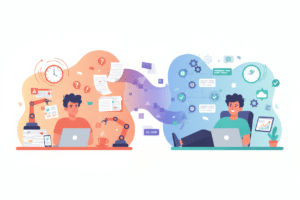
Picture this: It’s Monday morning, and instead of drowning in spreadsheets and manual processes, your HR team is sipping coffee while automated workflows handle employee skill assessments, learning recommendations, and progress tracking. Sounds like a dream? Well, it’s actually the reality that no-code automation can create for your talent development initiatives.
In today’s fast-paced business environment, organizations are constantly seeking ways to develop their workforce more efficiently. Traditional talent development methods often involve time-consuming manual processes that drain resources and delay results. Enter no-code automation – a game-changing approach that’s revolutionizing how companies nurture their most valuable asset: their people.
Understanding the Basics of No-Code Platforms 💡
Before diving into the specifics of talent development, let’s establish what no-code automation actually means. No-code platforms allow users to create sophisticated applications and workflows without writing a single line of code. Think of it as digital Lego blocks – you’re building complex systems by connecting pre-made components through intuitive drag-and-drop interfaces.
These platforms have democratized technology creation, enabling HR professionals to build custom solutions without relying on IT departments or expensive external developers. Popular no-code platforms like Zapier, Airtable, Notion, and Monday.com have become essential tools for forward-thinking organizations.
The beauty of no-code solutions lies in their accessibility. You don’t need a computer science degree to create powerful automation workflows that can transform your talent development processes. All you need is creativity, strategic thinking, and a willingness to experiment.
Key Benefits of Automated Talent Development ⚡
The advantages of implementing no-code automation in talent development extend far beyond simple time savings. Let me share some compelling benefits that organizations are experiencing:
Consistency at Scale: Automation ensures that every employee receives the same high-quality development experience, regardless of their location or manager. This consistency is particularly valuable for organizations with multiple offices or remote teams.
Real-Time Adaptability: Unlike static training programs, automated systems can adjust learning paths based on individual progress, performance data, and changing business needs. This dynamic approach keeps development relevant and engaging.
Data-Driven Insights: Automated systems capture valuable data about learning patterns, skill gaps, and development outcomes. This information enables HR teams to make informed decisions about future training investments and program improvements.
Resource Optimization: By automating routine tasks like scheduling, reminders, and progress tracking, HR professionals can focus on strategic initiatives that require human creativity and emotional intelligence.
Essential No-Code Tools for HR Teams 🛠️
Selecting the right tools is crucial for successful talent development automation. Here are some powerful no-code platforms that HR teams are using to transform their processes:
Zapier: The Swiss Army knife of automation, Zapier connects different applications and creates seamless workflows. For talent development, it can automatically enroll employees in courses based on performance reviews or send personalized learning recommendations via email.
Airtable: This versatile database platform excels at organizing employee data, tracking development progress, and creating custom dashboards. Its flexibility makes it perfect for managing complex talent development programs with multiple stakeholders.
Typeform: Creating engaging surveys and assessments becomes effortless with Typeform’s intuitive interface. Use it to gather feedback on training programs, conduct skill assessments, or collect career development preferences.
Notion: This all-in-one workspace can serve as a comprehensive talent development hub, housing learning resources, progress trackers, and collaboration spaces for mentorship programs.
Implementing Automated Learning Pathways 📚
One of the most impactful applications of no-code automation in talent development is creating personalized learning pathways. Traditional one-size-fits-all training programs often fail to address individual needs and learning styles. Automated pathways solve this problem by adapting to each employee’s unique situation.
Start by mapping out different career tracks within your organization. For each track, identify the core competencies, skills, and knowledge areas required for success. Then, use no-code platforms to create decision trees that guide employees through relevant learning experiences based on their current role, career aspirations, and skill gaps.
For example, you might create an automated workflow that assesses a new marketing hire’s current skills through a brief survey, then automatically enrolls them in relevant courses while scheduling check-in meetings with their manager. The system can track their progress and suggest advanced modules as they complete foundational training.
The key is to make these pathways feel personal and relevant. Nobody wants to feel like they’re being processed through a generic system. Use the data you collect to create meaningful touchpoints and celebrations of progress along the way.
Creating Personalized Employee Development Programs 🎯
Personalization is where no-code automation truly shines in talent development. By leveraging employee data and preferences, you can create development experiences that feel tailor-made for each individual.
Begin by establishing a comprehensive employee profile that includes current skills, career goals, learning preferences, and performance history. No-code platforms can automatically update these profiles based on completed assessments, manager feedback, and self-reported information.
Use this data to trigger personalized development recommendations. For instance, if an employee expresses interest in leadership roles and demonstrates strong communication skills but lacks project management experience, the system can automatically suggest relevant courses, mentorship opportunities, and stretch assignments.
The magic happens when these recommendations feel natural and timely. Instead of overwhelming employees with generic training catalogs, present them with curated suggestions that align with their immediate needs and long-term aspirations.
Streamlining Performance Tracking and Feedback 📊
Continuous feedback is essential for effective talent development, but traditional performance management systems often create more bureaucracy than value. No-code automation can transform this process into a seamless, ongoing conversation between employees and managers.
Create automated workflows that prompt regular check-ins, collect 360-degree feedback, and track progress toward development goals. These systems can send gentle reminders to managers, compile feedback from multiple sources, and generate insights that inform future development planning.
Consider implementing micro-feedback loops that capture learning moments in real-time. For example, after completing a training module, employees might receive an automated survey asking about immediate applications and challenges. This feedback can trigger additional resources or schedule follow-up conversations with mentors.
The goal is to make performance tracking feel supportive rather than evaluative. When employees see that feedback directly leads to relevant development opportunities, they become more engaged in the process.
Building Automated Onboarding Workflows 🌟
First impressions matter, and a well-designed onboarding experience sets the tone for an employee’s entire development journey. No-code automation can ensure that every new hire receives a comprehensive, engaging introduction to your organization’s culture and expectations.
Design workflows that begin before the employee’s first day. Automatically send welcome packages, provide access to pre-boarding resources, and schedule key meetings with team members and stakeholders. During their first weeks, trigger learning modules, social introductions, and progress check-ins based on their role and department.
The beauty of automated onboarding is its consistency and comprehensiveness. New hires won’t fall through the cracks or miss important information because a busy manager forgot to mention something. Every step is documented, tracked, and optimized based on feedback from previous cohorts.
Remember to build in human touchpoints throughout the automated process. While technology can handle logistics and information delivery, meaningful relationships and cultural integration still require personal interaction.
Measuring Success and ROI 📈
What gets measured gets managed, and talent development is no exception. No-code automation platforms excel at capturing and analyzing data that demonstrates the impact of your development initiatives.
Establish clear metrics that align with your organization’s strategic objectives. These might include skill acquisition rates, internal promotion percentages, employee engagement scores, or retention rates. Use automated dashboards to track these metrics in real-time and identify trends that inform program adjustments.
Don’t forget about qualitative measures. Automated surveys and feedback collection can capture employee sentiment, satisfaction levels, and perceived value of development programs. This information is invaluable for continuous improvement and stakeholder buy-in.
Calculate ROI by comparing program costs (including platform subscriptions, content creation, and administrative time) against measurable outcomes like reduced turnover, faster time-to-productivity, and improved performance ratings. Many organizations find that automated talent development programs pay for themselves within the first year through efficiency gains alone.
Common Challenges and Solutions 🔧
While no-code automation offers tremendous benefits, implementation isn’t always smooth sailing. Here are some common challenges and practical solutions:
Data Quality Issues: Automated systems are only as good as the data they process. Invest time in cleaning and standardizing existing employee data before implementing automation. Create clear guidelines for data entry and regular auditing processes.
Change Management Resistance: Some employees and managers may resist automated systems, preferring traditional approaches. Address this through clear communication about benefits, comprehensive training, and gradual implementation that allows people to adapt comfortably.
Over-Automation: It’s tempting to automate everything, but some aspects of talent development require human judgment and empathy. Strike a balance between efficiency and personal touch, ensuring that technology enhances rather than replaces meaningful human interactions.
Platform Integration Challenges: Organizations often use multiple systems that don’t communicate well with each other. Choose no-code platforms with robust integration capabilities, or use tools like Zapier to create bridges between different applications.
Frequently Asked Questions ❓
Q: Do I need technical skills to implement no-code automation for talent development?
A: Not at all! That’s the beauty of no-code platforms. While basic computer literacy is helpful, most platforms are designed for non-technical users. Many offer extensive tutorials, templates, and customer support to help you get started.
Q: How long does it take to see results from automated talent development programs?
A: Initial efficiency gains are often visible within weeks of implementation. However, meaningful talent development outcomes typically become apparent after 3-6 months, with full ROI realization often occurring within the first year.
Q: What’s the typical cost of implementing no-code automation for talent development?
A: Costs vary widely depending on organization size and chosen platforms. Many no-code tools offer tiered pricing starting from $10-50 per month for small teams, scaling up based on users and features. The investment is typically much lower than custom software development or enterprise HR platforms.
Q: Can no-code automation handle complex talent development scenarios?
A: Yes, modern no-code platforms are surprisingly sophisticated. They can handle multi-step workflows, conditional logic, data analysis, and integration with multiple systems. While extremely complex scenarios might require custom development, most talent development needs can be addressed with no-code solutions.
Q: How do I ensure data privacy and security with no-code platforms?
A: Choose reputable platforms that offer enterprise-grade security features, including encryption, access controls, and compliance certifications. Review their privacy policies carefully and ensure they meet your organization’s data protection requirements.
Conclusion: Embracing the Future of Talent Development 🌈
The future of talent development isn’t about replacing human connection with technology – it’s about using smart automation to create more time and space for meaningful growth experiences. No-code platforms have democratized the ability to build sophisticated systems that can transform how organizations nurture their people.
By implementing automated learning pathways, personalized development programs, and streamlined feedback systems, you’re not just improving efficiency – you’re creating a culture where continuous learning and growth become natural parts of the employee experience.
The journey toward automated talent development might seem daunting at first, but remember that you don’t need to transform everything overnight. Start small, experiment with simple workflows, and gradually build more sophisticated systems as your confidence and expertise grow.
Your employees deserve development experiences that are as innovative and forward-thinking as your business strategies. No-code automation gives you the tools to deliver exactly that, creating a competitive advantage that extends far beyond your HR department.
The question isn’t whether you should embrace no-code automation for talent development – it’s how quickly you can get started. Your future workforce is waiting, and the tools to unlock their potential are already at your fingertips. 🚀
Click Here For More Details