
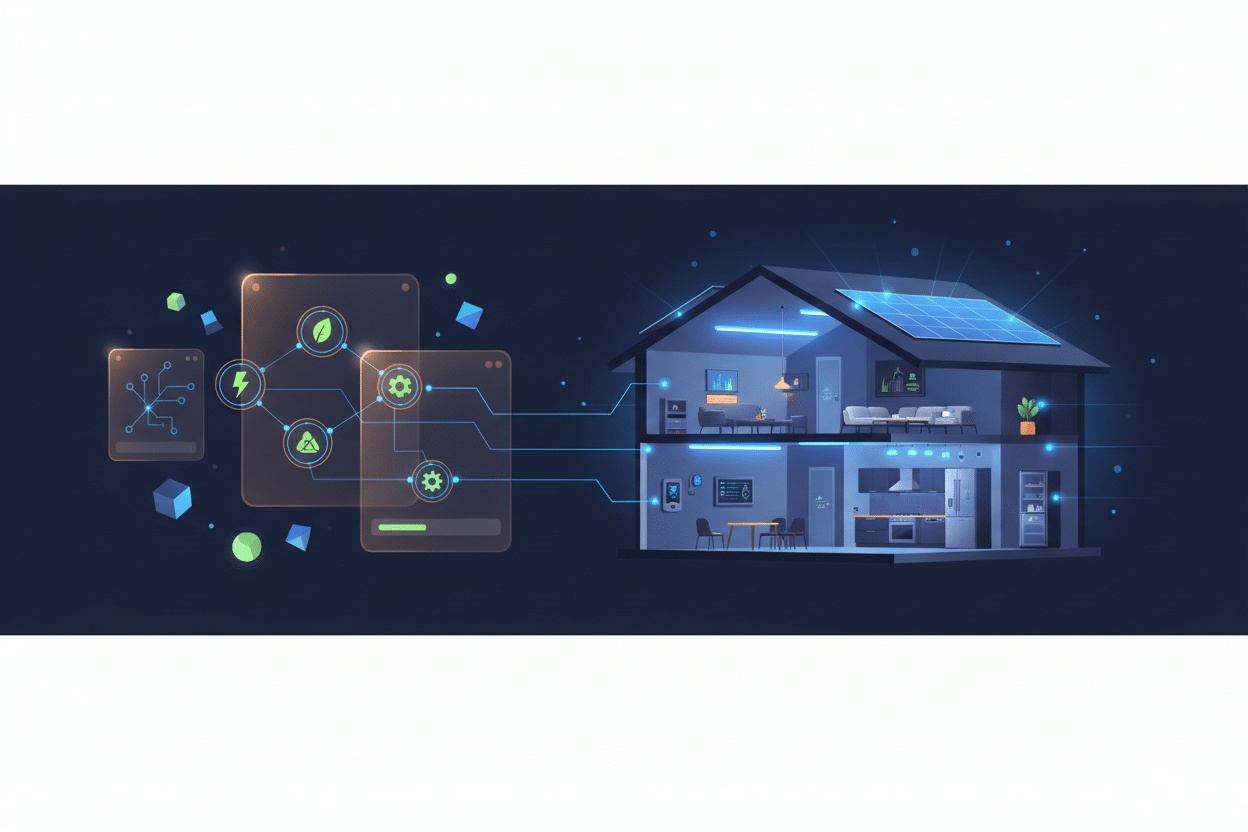
How to Use No-Code Automation for Efficient Energy Management ⚡
Are you tired of watching your energy bills skyrocket while feeling helpless about managing your home or business energy consumption? You’re not alone. With energy costs rising globally and environmental concerns at an all-time high, finding effective ways to manage energy usage has become more critical than ever. The good news? You don’t need to be a programming wizard or hire expensive developers to create powerful energy management solutions. Welcome to the world of no-code automation – your gateway to smarter, more efficient energy management.
No-code automation platforms have revolutionized how we approach energy management, making sophisticated control systems accessible to everyone. Whether you’re a homeowner looking to reduce monthly bills or a business owner seeking operational efficiency, this comprehensive guide will show you exactly how to harness the power of no-code tools to transform your energy consumption patterns.
Table of Contents 📋
Understanding No-Code Automation for Energy Management
Essential No-Code Platforms for Energy Automation
Setting Up Your First Energy Automation Workflow
Smart Home Energy Management Solutions
Commercial Energy Automation Strategies
Advanced Energy Monitoring and Analytics
Troubleshooting Common Energy Automation Issues
Future Trends in No-Code Energy Management
Understanding No-Code Automation for Energy Management 🏠
No-code automation represents a paradigm shift in how we interact with technology. Instead of writing complex code, these platforms use visual interfaces, drag-and-drop functionality, and pre-built templates to create sophisticated automation workflows. When applied to energy management, this approach allows you to connect various devices, sensors, and systems to work together intelligently.
Think of no-code energy automation as your personal energy assistant that never sleeps. It continuously monitors your energy usage patterns, weather conditions, occupancy levels, and time-of-day pricing to make real-time decisions about when to turn devices on or off, adjust thermostats, or switch between energy sources.
The beauty of this approach lies in its accessibility. You don’t need years of programming experience or expensive consultants. With a basic understanding of your energy needs and some creativity, you can build systems that rival those found in high-end smart buildings.
Essential No-Code Platforms for Energy Automation 🔧
Selecting the right platform is crucial for your energy automation success. Each platform offers unique strengths, and understanding these differences will help you make an informed decision based on your specific needs and technical comfort level.
Zapier stands out as one of the most user-friendly options for beginners. Its extensive library of integrations includes popular smart home devices, weather services, and utility companies. I’ve personally found Zapier particularly effective for creating simple but powerful automations like adjusting your thermostat based on weather forecasts or sending alerts when energy usage exceeds predetermined thresholds.
Microsoft Power Automate offers more robust capabilities, especially for businesses already using Microsoft’s ecosystem. Its strength lies in handling complex data processing and integration with enterprise systems. If you’re managing energy for multiple locations or need detailed reporting capabilities, Power Automate’s advanced features make it worth the steeper learning curve.
IFTTT (If This Then That) provides an excellent middle ground between simplicity and functionality. Its intuitive “if this, then that” logic makes it perfect for homeowners who want to dip their toes into energy automation without overwhelming complexity.
For those seeking more specialized energy management features, platforms like Node-RED and Home Assistant offer powerful automation capabilities specifically designed for IoT and smart home applications. While these require slightly more technical knowledge, they provide unparalleled flexibility for energy management scenarios.
Setting Up Your First Energy Automation Workflow 🚀
Creating your first energy automation workflow might seem daunting, but breaking it down into manageable steps makes the process straightforward and rewarding. Let’s walk through creating a basic but effective automation that can immediately impact your energy consumption.
Start by identifying a simple energy management goal. Perhaps you want to automatically adjust your thermostat when you leave home, or maybe you’d like your water heater to operate only during off-peak hours. Choose something specific and measurable – this will be your foundation for more complex automations later.
Next, map out the trigger conditions and desired actions. For our thermostat example, the trigger might be your smartphone leaving your home’s WiFi network, and the action would be setting the thermostat to an energy-saving temperature. This logical mapping helps you visualize the automation before building it.
Once you’ve chosen your platform and defined your workflow, begin with the setup process. Most platforms guide you through connecting your devices and accounts. Take time during this step to ensure all connections are secure and properly configured – a solid foundation prevents headaches later.
Test your automation thoroughly before relying on it completely. Start with non-critical systems and gradually expand as you gain confidence. I recommend running new automations in parallel with manual controls for at least a week to ensure they behave as expected under various conditions.
Smart Home Energy Management Solutions 🏡
Smart homes offer incredible opportunities for energy optimization through no-code automation. The key is creating interconnected systems that work together seamlessly to minimize waste while maintaining comfort and convenience.
Lighting automation represents one of the most impactful areas for energy savings. Beyond simple on/off scheduling, modern no-code platforms allow you to create sophisticated lighting scenarios that respond to occupancy, natural light levels, and even your daily routines. For instance, you can program your lights to gradually dim as bedtime approaches, automatically turn off in unoccupied rooms, and adjust brightness based on available sunlight.
HVAC optimization through automation can dramatically reduce your largest energy expense. Smart thermostats become even more powerful when integrated into broader automation workflows. Consider creating seasonal profiles that automatically adjust based on weather forecasts, occupancy patterns, and energy pricing. During my own experience implementing these systems, I’ve seen energy savings of 20-30% without any reduction in comfort.
Appliance scheduling and load balancing prevent multiple high-energy devices from running simultaneously. Your automation system can coordinate when your dishwasher, washing machine, and electric vehicle charger operate, spreading their energy consumption across off-peak hours and preventing demand spikes that trigger higher utility rates.
Water heating optimization often gets overlooked but offers significant savings potential. Smart water heaters can be programmed to heat water during the cheapest rate periods while ensuring hot water availability when needed. Advanced automations can even predict usage patterns and adjust heating schedules accordingly.
Commercial Energy Automation Strategies 🏢
Commercial energy management through no-code automation opens up possibilities for substantial cost savings and operational improvements. The scale and complexity of commercial buildings require more sophisticated approaches, but the principles remain accessible through no-code platforms.
Occupancy-based energy management forms the foundation of most commercial automation strategies. By integrating occupancy sensors, calendar systems, and building controls, you can ensure energy is only consumed in areas that are actually being used. This might involve automatically adjusting lighting, HVAC, and even elevator operations based on real-time occupancy data.
Peak demand management becomes crucial for businesses facing demand charges on their utility bills. No-code platforms can monitor your facility’s energy consumption in real-time and automatically shed non-critical loads when approaching peak thresholds. This might involve temporarily adjusting HVAC setpoints, delaying non-urgent equipment startups, or switching to backup power sources.
Multi-zone optimization allows different areas of your facility to operate independently based on their specific needs. Conference rooms, offices, warehouses, and common areas all have different energy requirements and usage patterns. Your automation system can create customized profiles for each zone while maintaining overall building efficiency.
Equipment maintenance scheduling through automation helps prevent energy waste from poorly maintained systems. By monitoring equipment performance data and scheduling preventive maintenance, you can ensure your energy systems operate at peak efficiency throughout their lifespan.
Advanced Energy Monitoring and Analytics 📊
Effective energy management requires detailed visibility into your consumption patterns, and no-code platforms excel at collecting, processing, and presenting this information in actionable ways. Advanced monitoring goes beyond simple usage tracking to provide insights that drive continuous improvement.
Real-time dashboards created through no-code platforms can display energy consumption across different systems, time periods, and cost centers. These visualizations help identify trends, anomalies, and optimization opportunities that might otherwise go unnoticed. I’ve found that simply making energy data visible often leads to immediate behavioral changes that reduce consumption.
Predictive analytics capabilities in modern no-code platforms can forecast energy usage based on historical data, weather patterns, and operational schedules. This foresight enables proactive management decisions, such as pre-cooling buildings before hot weather arrives or scheduling maintenance during low-demand periods.
Automated reporting ensures stakeholders receive regular updates on energy performance without manual intervention. Whether you need daily consumption summaries, weekly efficiency reports, or monthly cost analyses, no-code platforms can generate and distribute these reports automatically.
Benchmark comparisons help contextualize your energy performance against similar buildings, previous periods, or industry standards. This comparative analysis reveals whether your optimization efforts are delivering expected results and highlights areas for further improvement.
Troubleshooting Common Energy Automation Issues 🔧
Even the best-designed automation systems occasionally encounter problems, and knowing how to diagnose and resolve common issues quickly minimizes disruption to your energy management goals. Most problems fall into predictable categories with straightforward solutions.
Connectivity issues represent the most frequent source of automation failures. Smart devices may lose WiFi connections, cloud services might experience outages, or API integrations could become temporarily unavailable. Building redundancy into your automations and implementing offline fallback modes helps maintain basic functionality during connectivity problems.
Sensor calibration drift can cause automations to make decisions based on inaccurate data. Temperature sensors might read high or low, occupancy sensors could become oversensitive, or energy meters might lose accuracy over time. Regular calibration checks and data validation rules help identify and correct these issues before they impact system performance.
Logic errors in automation workflows often manifest as unexpected behavior rather than complete failures. Devices might turn on when they should turn off, schedules could trigger at wrong times, or conditions might not evaluate correctly. Systematic testing and clear documentation of your automation logic makes these problems easier to identify and fix.
Platform limitations sometimes become apparent only after implementing complex automations. Rate limits, processing delays, or feature restrictions might constrain your automation capabilities. Understanding these limitations upfront and designing workarounds ensures your automations remain robust and reliable.
Future Trends in No-Code Energy Management 🔮
The future of no-code energy management promises even more sophisticated capabilities and broader accessibility. Understanding emerging trends helps you make informed decisions about platform investments and automation strategies that will remain relevant as technology evolves.
Artificial intelligence integration is making no-code platforms smarter and more autonomous. Machine learning algorithms can identify patterns in your energy usage that human operators might miss, automatically optimize system performance, and even predict equipment failures before they occur. These AI-enhanced platforms require no additional programming knowledge while delivering increasingly sophisticated results.
Edge computing capabilities are bringing more processing power directly to your energy management devices. This reduces dependence on cloud connectivity, improves response times, and enhances privacy by keeping sensitive data local. No-code platforms are beginning to leverage edge computing to create more resilient and responsive automation systems.
Blockchain integration for energy trading and verification is emerging as a powerful tool for businesses with renewable energy generation capabilities. No-code platforms are starting to incorporate blockchain features that enable automated energy trading, carbon credit management, and renewable energy certificate tracking.
Enhanced interoperability standards are making it easier to connect devices from different manufacturers and integrate with various energy management systems. This trend toward standardization reduces vendor lock-in and increases the flexibility of no-code automation solutions.
Frequently Asked Questions ❓
What is the typical cost savings from implementing no-code energy automation? Most users see energy cost reductions of 15-30% within the first year of implementation. The exact savings depend on your current energy efficiency, local utility rates, and the sophistication of your automation workflows. Commercial buildings often see larger percentage savings due to their more complex energy systems and higher baseline consumption.
How long does it take to set up a basic energy automation system? A simple automation workflow can be created and tested in a few hours, while comprehensive energy management systems typically require 2-4 weeks to implement fully. The timeline depends on the number of devices you’re connecting, the complexity of your automation logic, and your familiarity with the chosen platform.
Do I need special hardware to implement no-code energy automation? Most modern smart devices are compatible with no-code platforms, but you may need to add smart switches, sensors, or energy monitors to existing equipment. The good news is that these devices have become increasingly affordable and easy to install, often requiring no electrical expertise.
Can no-code automation work with my existing energy management system? Yes, most established energy management systems offer API integrations or webhook capabilities that no-code platforms can utilize. Even older systems can often be integrated using smart relays or IoT bridge devices that translate between different communication protocols.
What happens if my internet connection goes down? Well-designed automation systems include offline modes and local processing capabilities. Critical functions like HVAC control and safety systems should continue operating based on pre-programmed logic, while advanced features requiring internet connectivity may be temporarily unavailable until connection is restored.
How secure are no-code energy automation platforms? Reputable no-code platforms implement enterprise-grade security measures including data encryption, secure authentication, and regular security audits. However, you should review each platform’s security practices and implement additional measures like network segmentation and regular password updates to maintain optimal security.
Conclusion: Powering Your Future with Smart Energy Automation 💡
No-code automation has democratized energy management, putting powerful tools in the hands of anyone motivated to reduce costs and environmental impact. Whether you’re starting with simple scheduling automations or building comprehensive energy management ecosystems, the journey toward more efficient energy usage begins with a single step.
The key to success lies in starting small, learning continuously, and gradually expanding your automation capabilities as you gain experience and confidence. Remember that energy management is not a one-time project but an ongoing process of optimization and refinement.
As we face growing energy challenges and increasing costs, those who embrace automation will find themselves better positioned to maintain comfort and productivity while minimizing their environmental footprint. The tools are available, the technology is mature, and the potential savings are substantial. The question isn’t whether you should implement energy automation – it’s how quickly you can get started.
Take the first step today by choosing a no-code platform that matches your needs and creating your first simple automation. Your future self (and your energy bills) will thank you for making this investment in smarter, more efficient energy management. 🌟
Click Here For More Details


 Restream.io 1 Month Pro Plan – Private Activation on Your Email