
How to Use No-Code Tools to Foster a Collaborative Work Environment 🚀
Picture this: Your marketing team wants to launch a campaign tracker, your HR department needs a better onboarding system, and your sales team is crying out for a custom CRM solution. In the traditional world, you’d need to submit IT tickets, wait months for development, and probably end up with something that doesn’t quite fit your needs. But what if I told you there’s a better way? Welcome to the revolution of no-code tools – where collaboration isn’t just encouraged, it’s practically inevitable! 💡
In today’s fast-paced business environment, the ability to adapt quickly and work together seamlessly has become more crucial than ever. No-code platforms are breaking down the technical barriers that once separated different departments, creating opportunities for unprecedented collaboration. Let’s dive into how these powerful tools can transform your workplace into a collaborative powerhouse.
Understanding No-Code Tools and Their Collaborative Potential
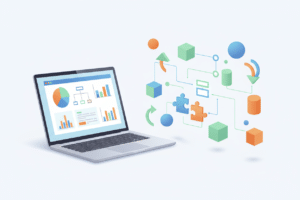
Before we jump into the how-to, let’s establish what we’re working with. No-code tools are platforms that allow users to create applications, automate workflows, and build digital solutions without writing a single line of code. Think of them as digital LEGO blocks – anyone can pick them up and start building something amazing! 🧱
What makes these tools particularly powerful for collaboration is their democratizing effect on technology. When Sarah from accounting can build a expense tracking app and James from operations can create a inventory management system, magic happens. Suddenly, every team member becomes a potential problem-solver, not just a problem-identifier.
The beauty lies in the visual, drag-and-drop interfaces that make sense to human brains. Instead of deciphering complex code, team members work with familiar concepts like forms, buttons, and workflows. This accessibility breaks down the traditional silos between technical and non-technical staff, fostering an environment where ideas flow freely across departments.
Breaking Down Traditional Silos with Accessible Technology
Let’s be honest – we’ve all been there. You have a brilliant idea for improving a process, but it gets lost in translation when you try to explain it to the IT department. By the time the solution is built (if it ever gets built), your original problem has evolved into three new ones! 😅

No-code tools eliminate this frustrating game of telephone. When team members can prototype their own solutions, communication becomes more concrete and visual. Instead of saying “I need something that tracks customer interactions,” you can actually build a basic version and say “I need something like this, but with these additional features.”
This shift from abstract descriptions to tangible prototypes revolutionizes how teams communicate about technology needs. Suddenly, everyone speaks the same language – the language of working solutions. Marketing can show operations exactly what they need, HR can demonstrate their workflow requirements to finance, and customer service can build examples of their ideal ticketing system.
Essential No-Code Platforms for Team Collaboration
Choosing the right no-code platform can make or break your collaborative efforts. Let me walk you through some game-changers that have proven their worth in fostering teamwork:
Airtable stands out as the Swiss Army knife of collaborative databases. It combines the familiarity of spreadsheets with the power of databases, making it perfect for teams that need to share and manipulate data together. I’ve seen marketing teams use it to track campaign performance while simultaneously allowing sales teams to update lead information in real-time.
Notion has become the darling of collaborative workspaces, and for good reason. It’s like having a digital office where every team can create their own space while staying connected to the bigger picture. Teams can build everything from project wikis to complex workflow management systems, all while maintaining transparency across departments.
Zapier acts as the invisible glue that connects all your tools together. When your CRM talks to your email marketing platform, which then updates your project management tool, you’ve created a collaborative ecosystem where information flows seamlessly between teams without manual intervention.
Monday.com and Asana excel at project collaboration, offering visual workflow builders that help teams coordinate complex projects without getting lost in the details. These platforms make project dependencies visible and manageable, even for non-project managers.
Building Cross-Functional Workflows That Actually Work
Here’s where the rubber meets the road. Building workflows that span multiple departments requires more than just good intentions – it requires strategic thinking and careful design. The key is to start small and think big! 🎯
Begin by identifying a simple process that touches multiple teams. Maybe it’s the employee onboarding process that involves HR, IT, and the hiring manager. Using a no-code platform, you can create a workflow where HR initiates the process, IT automatically receives equipment requests, and managers get reminders about check-ins – all without anyone sending a single email.
The magic happens when you design these workflows with transparency in mind. Every stakeholder can see where things stand, what’s coming next, and where bottlenecks might be forming. This visibility naturally encourages collaboration because everyone understands their role in the bigger picture.
Remember to build in feedback loops. The best collaborative workflows are living documents that evolve based on user input. When the accounting team suggests an improvement to the expense approval process, they should be able to implement and test that change themselves, rather than submitting a change request and waiting months for updates.
Real-Time Communication Integration Strategies
Communication is the lifeblood of collaboration, and no-code tools excel at keeping everyone in the loop. But here’s the thing – notification overload is real, and it can kill collaboration faster than you can say “Slack fatigue.” 📱
The secret is intelligent communication integration. Instead of sending notifications for every minor update, configure your no-code tools to communicate meaningfully. Set up alerts for significant milestones, exceptions that need attention, and decisions that require input. Use tools like Slack or Microsoft Teams integrations to bring these notifications into spaces where teams are already communicating.
Consider creating dedicated channels for different types of automated updates. Your sales team might want to know immediately when a high-value lead enters the system, while your marketing team might prefer daily summaries of campaign performance. The beauty of no-code platforms is that you can customize these communication patterns without bothering your IT department.
Don’t forget about asynchronous collaboration. Not everyone works in the same time zone or has the same schedule. Build workflows that capture context and decision-making rationale, so team members can contribute meaningfully even when they’re not online at the same time.
Overcoming Common Implementation Challenges
Let’s address the elephant in the room – implementing no-code tools for collaboration isn’t always smooth sailing. I’ve seen organizations stumble over some predictable hurdles, but the good news is that these challenges are entirely manageable with the right approach. 🛠️
The biggest challenge is often resistance to change. Some team members might feel threatened by new tools, especially if they’ve built their expertise around existing systems. The solution? Start with enthusiastic early adopters and let success stories spread organically. When people see their colleagues saving time and reducing frustration, adoption becomes much easier.
Data security and governance concerns are legitimate, especially in larger organizations. Address these head-on by establishing clear guidelines about what types of data can be used in no-code tools and what requires traditional IT oversight. Many no-code platforms now offer enterprise-grade security features that can satisfy even the most cautious IT departments.
Another common pitfall is tool proliferation – when every team starts building their own solutions without coordination, you end up with a fragmented ecosystem that actually hinders collaboration. Prevent this by establishing a center of excellence or appointing no-code champions who can guide tool selection and ensure integration between different solutions.
Measuring Success: KPIs for Collaborative No-Code Initiatives
How do you know if your no-code collaboration efforts are actually working? You measure what matters! But here’s the tricky part – the most important benefits of collaboration are often the hardest to quantify. 📊
Start with the obvious metrics: time saved on manual processes, reduction in email volume, faster project completion times, and decreased IT ticket volume. These give you concrete numbers to show leadership and justify continued investment in no-code tools.
But don’t stop there. Look for leading indicators of improved collaboration: increased cross-departmental project participation, more frequent knowledge sharing, higher employee satisfaction scores, and reduced time-to-resolution for cross-functional issues. These softer metrics often tell the real story of organizational transformation.
Consider tracking adoption rates and user engagement within your no-code platforms. High usage rates combined with positive feedback indicate that tools are truly facilitating collaboration rather than just adding another layer of complexity to people’s workflows.
Perhaps most importantly, measure innovation metrics. Are teams proposing and implementing more process improvements? Are they identifying and solving problems faster? Are cross-functional solutions becoming more common? These indicators suggest that no-code tools are fostering a truly collaborative culture, not just improving individual productivity.
Future-Proofing Your Collaborative Infrastructure
The no-code landscape is evolving rapidly, and what works today might be obsolete tomorrow. Building a sustainable collaborative infrastructure requires thinking beyond current tools and focusing on principles that will endure. 🔮
Invest in platforms with strong API capabilities and integration ecosystems. This ensures that as your needs evolve, you can connect new tools without starting from scratch. Look for vendors with clear product roadmaps and strong track records of innovation – you want partners, not just software providers.
Build internal capabilities alongside external tools. Train team members not just to use specific platforms, but to think systematically about process improvement and collaboration. These skills transfer between tools and create lasting organizational value.
Stay flexible in your approach. The specific tools you use today might change, but the collaborative workflows and communication patterns you establish will likely persist. Focus on creating sustainable practices that can adapt to new technologies as they emerge.
Conclusion: Embracing the Collaborative Revolution
We’re living through a remarkable transformation in how teams work together, and no-code tools are at the heart of this revolution. By democratizing technology creation, these platforms are breaking down barriers that have separated departments for decades. The result? Organizations that are more agile, more innovative, and more responsive to both internal needs and external challenges. ✨
The journey toward a truly collaborative work environment isn’t always easy, but it’s absolutely worth it. When teams can build solutions together, communicate seamlessly, and adapt quickly to changing needs, magic happens. Projects move faster, employee satisfaction increases, and organizations become more resilient in the face of uncertainty.
Remember, the goal isn’t just to implement new tools – it’s to foster a culture where collaboration is the default, not the exception. No-code platforms are simply the enablers that make this cultural shift possible. Start small, think big, measure what matters, and most importantly, let your teams lead the way. The collaborative future of work is here, and it’s more accessible than ever before!
Frequently Asked Questions
Q: How long does it typically take to see results from implementing no-code collaboration tools?
Most organizations see initial improvements within 2-4 weeks of implementation, with significant cultural shifts becoming apparent after 3-6 months. The key is starting with high-impact, low-complexity use cases that demonstrate value quickly.
Q: What’s the biggest mistake companies make when implementing no-code tools for collaboration?
The most common mistake is treating no-code tools as purely technical solutions rather than change management initiatives. Success requires equal attention to technology, process design, and cultural adaptation.
Q: How do you prevent no-code tool sprawl across different departments?
Establish governance early by creating a center of excellence, setting clear guidelines for tool selection, and ensuring integration capabilities between different platforms. Regular cross-departmental reviews help identify consolidation opportunities.
Q: Are no-code tools secure enough for enterprise use?
Many modern no-code platforms offer enterprise-grade security features including SSO, audit trails, and compliance certifications. However, it’s important to evaluate each platform’s security capabilities against your specific requirements and establish clear data governance policies.
Q: How do you measure ROI on no-code collaboration initiatives?
Focus on both hard metrics (time saved, reduced IT costs, faster project completion) and soft metrics (employee satisfaction, cross-departmental collaboration frequency, innovation rates). The combination provides a comprehensive view of value creation.
Click Here For More Details