The Benefits of No-Code Automation for HR Departments: Streamlining People Operations Without Technical Complexity
Table of Contents
🔍 Introduction to No-Code HR Automation
⚡ What is No-Code Automation?
🎯 Key Benefits for HR Teams
📋 Common HR Processes Perfect for Automation
🛠️ Popular No-Code Tools for HR
🚀 Getting Started with HR Automation
❓ Frequently Asked Questions
📈 Conclusion
Introduction to No-Code HR Automation
Picture this: it’s Monday morning, and your HR inbox is already overflowing with employee requests, onboarding paperwork, and time-off approvals. Sound familiar? 😓 If you’re nodding your head, you’re not alone. HR professionals across the globe are drowning in repetitive administrative tasks that eat away at their time and energy – time that could be better spent on strategic initiatives and meaningful employee engagement.
Enter no-code automation: the game-changing solution that’s revolutionizing how HR departments operate. This isn’t about replacing the human touch that makes HR special; it’s about eliminating the mundane, repetitive tasks that prevent you from focusing on what truly matters – your people.
In today’s fast-paced business environment, HR teams are expected to do more with less while maintaining exceptional employee experiences. No-code automation platforms are making this possible by empowering HR professionals to create sophisticated workflows without writing a single line of code. Let’s explore how this technology can transform your department and give you back the time to be truly strategic.
What is No-Code Automation?
No-code automation is exactly what it sounds like – creating automated workflows and processes without needing programming knowledge. Think of it as building with digital Lego blocks instead of constructing from scratch with raw materials. 🧱
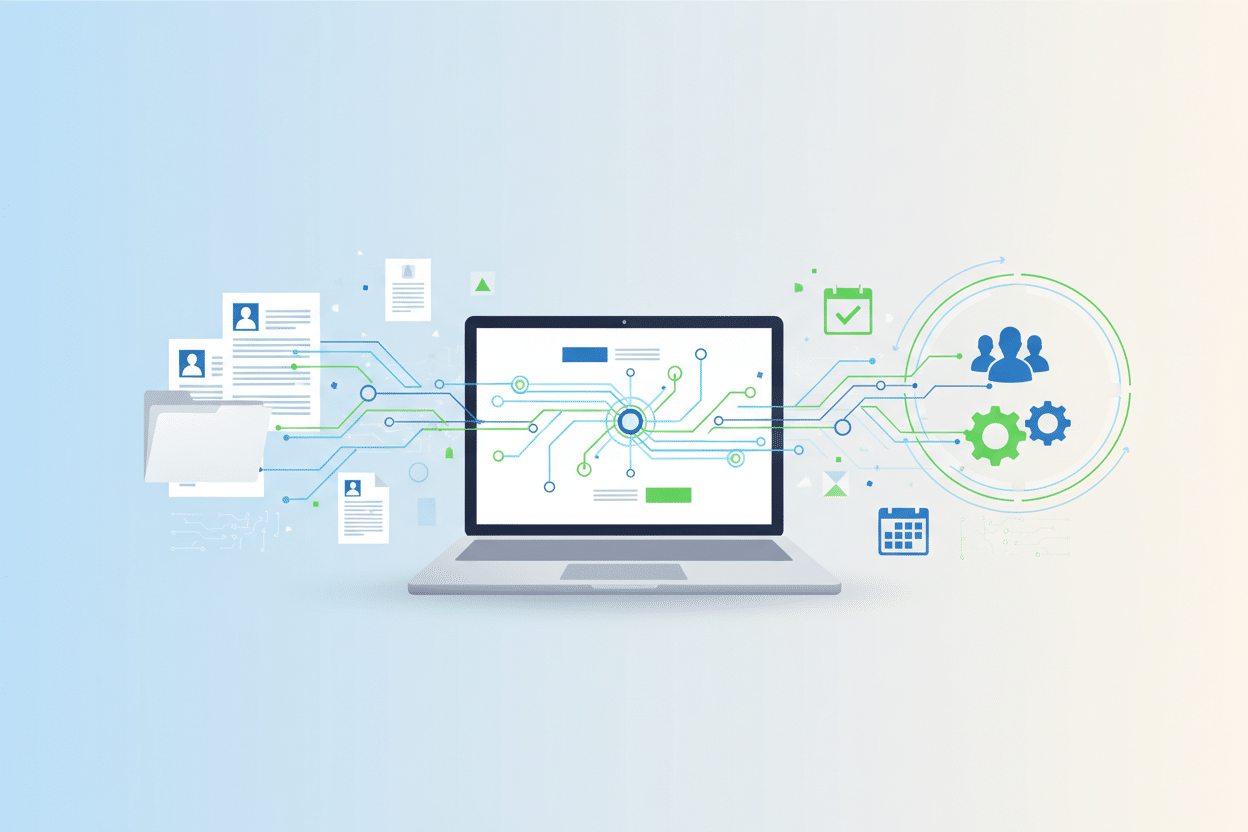
These platforms use visual interfaces, drag-and-drop functionality, and pre-built templates to help you design sophisticated automation workflows. You simply define the triggers (what starts the process), actions (what happens), and conditions (when it happens), and the platform handles all the technical heavy lifting.
For HR departments, this means you can automate everything from employee onboarding sequences to performance review reminders without waiting months for IT support or hiring expensive developers. It’s democratizing automation and putting the power directly in the hands of the people who understand the processes best – you!
Key Benefits for HR Teams
Dramatic Time Savings and Efficiency Gains
The most immediate benefit of no-code automation is the incredible time savings. Studies show that HR professionals spend up to 40% of their time on administrative tasks that could be automated. Imagine reclaiming those hours for strategic planning, employee development, or simply having meaningful conversations with your team members. ⏰
When you automate routine processes like data entry, status updates, and basic approvals, you’re not just saving time – you’re multiplying your impact. One automated workflow can handle hundreds of requests without fatigue, errors, or delays.
Enhanced Employee Experience
Nothing frustrates employees more than waiting days for simple approvals or getting lost in bureaucratic processes. Automation creates seamless, instant experiences that make your workforce feel valued and supported.
Automated onboarding workflows can welcome new hires with personalized messages, automatically provision access to necessary systems, and guide them through their first week step by step. This level of organization and attention creates a powerful first impression that sets the tone for their entire employee journey. ✨
Improved Accuracy and Compliance
Human error is inevitable, especially when dealing with repetitive tasks. Automated workflows follow the same steps every single time, ensuring consistency and reducing the risk of costly mistakes.
For compliance-heavy processes like background checks, document collection, or regulatory reporting, automation provides an audit trail and ensures nothing falls through the cracks. This is particularly valuable for industries with strict compliance requirements where errors can result in significant penalties.
Cost-Effective Scalability
As your organization grows, traditional HR processes often require proportional increases in staff. Automation allows you to scale operations without necessarily scaling headcount. A well-designed automated system can handle 10 employees or 10,000 with minimal additional resources.
This scalability is particularly powerful for growing companies that need to maintain service quality while managing budget constraints. Instead of hiring additional administrative support, you can invest in systems that grow with you. 📈
Common HR Processes Perfect for Automation
Employee Onboarding and Offboarding
Onboarding is often the first extensive interaction new employees have with your organization, making it crucial to get right. Automated onboarding can include welcome emails, document collection, system access provisioning, training schedule creation, and check-in reminders.
Similarly, offboarding automation ensures departing employees complete all necessary steps, from returning equipment to completing exit interviews, while protecting sensitive company information.
Time-Off and Leave Management
Managing vacation requests, sick leave, and other time-off requests is a perfect candidate for automation. Workflows can automatically check available balances, route requests to appropriate managers, update calendars, and send notifications to relevant team members.
Advanced automation can even handle complex scenarios like ensuring minimum staffing levels or managing overlapping requests within the same department. 🏖️
Performance Review Cycles
Performance reviews involve multiple stakeholders, deadlines, and follow-up actions. Automation can manage the entire cycle from initial notifications to final documentation, ensuring no reviews are missed and all participants stay on track.
Automated reminders, escalation procedures, and progress tracking take the administrative burden off HR while ensuring fair and timely evaluations for all employees.
Recruitment and Candidate Management
From initial application acknowledgments to interview scheduling and candidate communication, recruitment involves numerous touchpoints that benefit from automation. You can create workflows that automatically screen applications, send personalized responses, schedule interviews, and gather feedback from hiring managers.
This ensures candidates have a positive experience regardless of the outcome while keeping your recruitment pipeline moving efficiently.
Popular No-Code Tools for HR
Zapier for Simple Integrations
Zapier excels at connecting different HR tools and creating simple automation workflows. If you use multiple platforms like Slack, Google Workspace, and your HRIS, Zapier can help them communicate seamlessly.
For example, you could create a “Zap” that automatically adds new employees to Slack channels, creates Google Drive folders, and sends welcome emails when they’re added to your HR system.
Microsoft Power Automate for Office 365 Users
If your organization uses Microsoft 365, Power Automate provides deep integration with familiar tools like Outlook, Teams, and SharePoint. It’s particularly powerful for document-heavy processes and approval workflows.
You can create sophisticated approval chains that route requests through multiple managers while keeping everyone informed of progress and decisions. 💼
Airtable for Database-Driven Workflows
Airtable combines the simplicity of a spreadsheet with the power of a database, making it excellent for tracking employee information, managing recruitment pipelines, or organizing training programs.
Its automation features can trigger actions based on data changes, send notifications, and update related records automatically.
Getting Started with HR Automation
Identify Your Biggest Pain Points
Start by documenting the processes that consume the most time or cause the most frustration. Look for tasks that are repetitive, rule-based, and don’t require complex decision-making.
Common starting points include new employee paperwork, time-off requests, or routine status updates. Choose something with clear inputs and outputs that you can easily define in an automated workflow.
Start Small and Scale Gradually
Resist the temptation to automate everything at once. Begin with a single, simple process and perfect it before moving to more complex workflows. This approach helps build confidence and allows you to learn the platform without overwhelming yourself or your team.
Once your first automation is running smoothly, you can gradually add more sophisticated features or tackle additional processes. 🌱
Involve Your Team in the Process
The people who currently handle these processes often have valuable insights about edge cases, exceptions, and potential improvements. Include them in the design process to ensure your automation actually solves real problems.
Additionally, involving your team helps with adoption since they’ll understand how the automation works and feel ownership over the solution.
Frequently Asked Questions
Q: Will automation replace HR jobs?
A: No, automation handles routine tasks so HR professionals can focus on strategic work like employee development, culture building, and complex problem-solving that require human judgment and empathy. 🤝
Q: How much technical knowledge do I need?
A: None! That’s the beauty of no-code platforms. If you can use email or create a spreadsheet, you can build automation workflows.
Q: What if something goes wrong with an automated process?
A: Most platforms include monitoring and alert features. You can also build in approval steps for critical processes and always maintain manual override capabilities.
Q: How do I measure the success of HR automation?
A: Track metrics like time saved, error reduction, employee satisfaction scores, and process completion times. Most organizations see immediate improvements in efficiency and accuracy.
Q: Can automation handle complex HR scenarios?
A: While automation excels at routine processes, complex situations requiring judgment should still involve humans. The key is finding the right balance between automation and human oversight.
Conclusion: Embracing the Future of HR Operations
No-code automation isn’t just a trendy technology – it’s a fundamental shift in how HR departments can operate more efficiently while delivering better employee experiences. By automating routine tasks, you’re not diminishing the human element of HR; you’re amplifying it by freeing yourself to focus on what truly matters: building great workplace cultures and supporting your people’s growth and success. 🚀
The organizations that embrace automation today will have a significant competitive advantage tomorrow. They’ll be able to scale more efficiently, respond more quickly to employee needs, and maintain higher levels of accuracy and compliance.
Remember, you don’t need to transform everything overnight. Start with one simple process, learn from the experience, and gradually expand your automation capabilities. Before you know it, you’ll wonder how you ever managed without these powerful tools.
The future of HR is here, and it’s more human than ever – precisely because automation is handling everything else. Are you ready to reclaim your time and rediscover the strategic impact you can have when freed from administrative burdens? The journey starts with a single automated workflow, and the possibilities are endless. ✨
Click Here For More Details

 Restream.io 1 Month Pro Plan – Private Activation on Your Email