The Benefits of No-Code Automation for Streamlining Sales Processes: A Game-Changer for Modern Businesses 🚀
Table of Contents
• Introduction to No-Code Sales Automation
• What is No-Code Automation and How Does it Work?
• Top Benefits of No-Code Automation for Sales Teams
• Real-World Applications in Sales Process Optimization
• Getting Started with No-Code Sales Automation
• Common Challenges and How to Overcome Them
• The Future of Sales Automation
• Frequently Asked Questions
Introduction: Why Sales Teams Are Embracing No-Code Solutions
Picture this: your sales team spends hours each day on repetitive tasks like data entry, follow-up emails, and lead qualification. Meanwhile, hot prospects slip through the cracks because your team is buried in administrative work instead of building relationships and closing deals. Sound familiar? 😤
You’re not alone. Studies show that sales professionals spend only 36% of their time actually selling, with the rest consumed by administrative tasks and manual processes. This is where no-code automation swoops in like a superhero, transforming how sales teams operate without requiring a computer science degree or a hefty IT budget.
No-code automation has revolutionized sales processes across industries, enabling teams to streamline workflows, eliminate bottlenecks, and focus on what they do best: converting prospects into loyal customers. In this comprehensive guide, we’ll explore how no-code solutions can transform your sales operations and boost your bottom line.
What is No-Code Automation and How Does it Work? 🔧
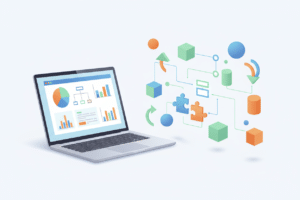
No-code automation refers to software platforms that allow users to create automated workflows and applications without writing traditional code. Think of it as building with digital Lego blocks – you drag, drop, and connect pre-built components to create powerful automation sequences.
These platforms use visual interfaces with simple logic builders, making it possible for sales professionals to create sophisticated automation workflows in minutes rather than months. Popular no-code automation tools like Zapier, Microsoft Power Automate, and Bubble have democratized technology, putting the power of automation directly into the hands of business users.
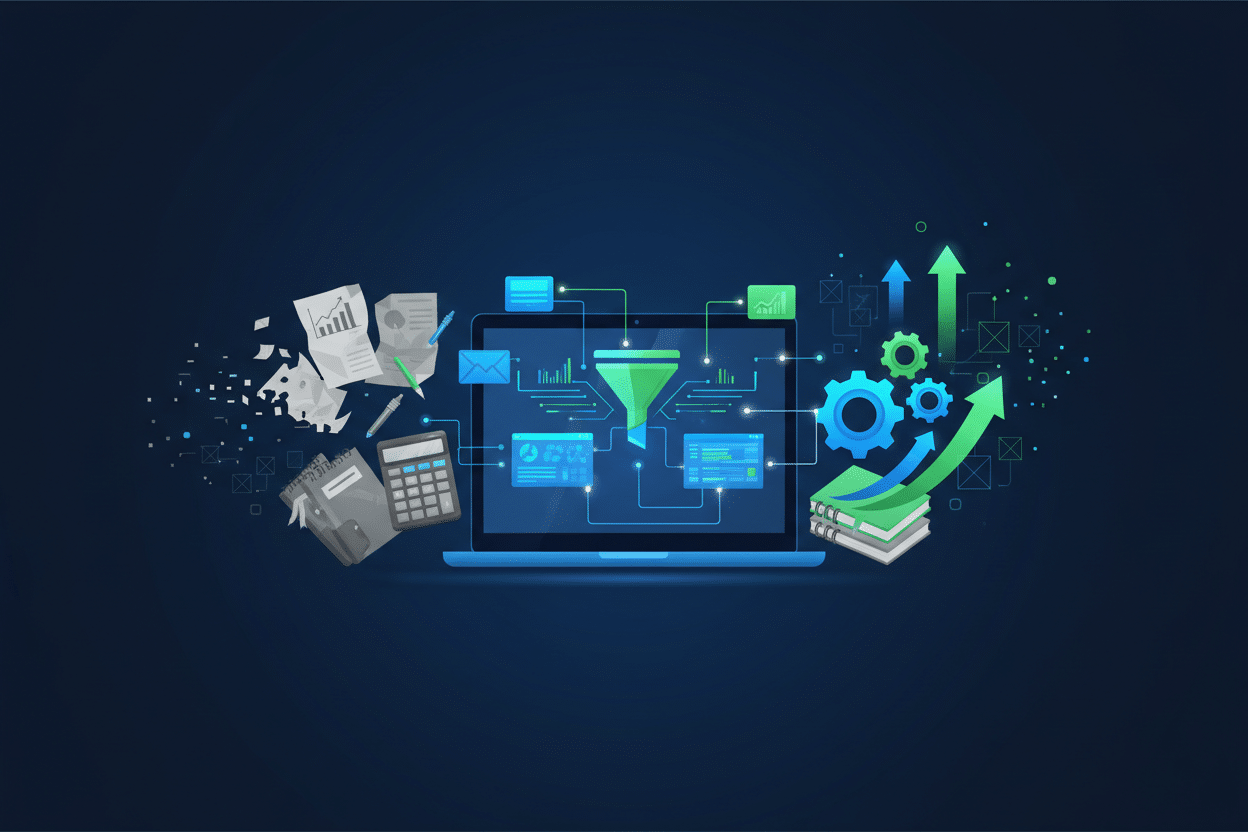
The magic happens through triggers and actions. When a specific event occurs (the trigger), the system automatically performs predetermined actions. For example, when a new lead fills out a contact form, the system can automatically add them to your CRM, send a welcome email, assign them to a sales rep, and schedule a follow-up task – all without human intervention.
Top Benefits of No-Code Automation for Sales Teams
Dramatically Increased Productivity and Efficiency ⚡
The most immediate benefit of implementing no-code automation in your sales process is the dramatic boost in productivity. When your team isn’t bogged down by manual data entry, they can focus on high-value activities like prospecting, relationship building, and closing deals.
Consider Sarah, a sales manager at a mid-sized software company. Before implementing no-code automation, her team spent 3-4 hours daily on administrative tasks. After automating lead routing, follow-up sequences, and data synchronization between tools, they reclaimed those hours for actual selling activities. The result? A 40% increase in qualified leads contacted and a 25% boost in conversion rates within just three months.
No-code automation eliminates the friction in your sales pipeline, ensuring that leads move smoothly from one stage to the next without getting stuck due to human oversight or delays. This seamless flow translates directly into faster deal cycles and higher revenue.
Cost-Effective Solution with Rapid ROI 💰
Traditional custom software development can cost tens of thousands of dollars and take months to implement. No-code automation platforms, on the other hand, often start at less than $20 per month and can be set up in hours or days.
The return on investment is typically visible within weeks. When you calculate the cost of sales rep time spent on manual tasks versus the minimal cost of automation tools, the math is compelling. A sales professional earning $75,000 annually who saves 2 hours daily through automation generates approximately $18,000 in recovered productivity value per year – far exceeding the cost of most no-code platforms.
Moreover, these solutions scale with your business. As your sales team grows, the automation grows with you without proportional increases in administrative overhead or the need for additional support staff.
Enhanced Lead Management and Follow-Up Consistency 📈
Inconsistent follow-up is one of the biggest culprits behind lost sales opportunities. Research indicates that 35-50% of sales go to the vendor that responds first, yet many businesses struggle with timely, consistent prospect engagement.
No-code automation ensures that every lead receives immediate attention and consistent follow-up according to your predetermined sequences. Whether it’s an instant acknowledgment email, automatic lead scoring based on behavior, or triggered reminders for sales reps, automation eliminates the human error factor in lead management.
The system never forgets to follow up, never takes a sick day, and never gets overwhelmed during busy periods. This consistency builds trust with prospects and significantly improves conversion rates throughout your sales funnel.
Improved Data Accuracy and Insights 📊
Manual data entry is not only time-consuming but also prone to errors. Typos, inconsistent formatting, and missing information can sabotage your sales analytics and lead to poor decision-making. No-code automation minimizes human error by automatically capturing, formatting, and syncing data across your sales stack.
When data flows seamlessly between your website forms, CRM, email marketing platform, and analytics tools, you gain a complete, accurate picture of your sales performance. This clean data enables better forecasting, more effective lead scoring, and data-driven optimization of your sales processes.
Additionally, automated data collection provides real-time insights into prospect behavior, engagement patterns, and conversion metrics that would be impossible to track manually at scale.
Real-World Applications in Sales Process Optimization
Lead Qualification and Routing Automation 🎯
One of the most powerful applications of no-code automation is intelligent lead qualification and routing. Instead of having leads sit in a general inbox or get manually distributed, automation can instantly evaluate incoming leads based on predetermined criteria and route them to the most appropriate sales representative.
For instance, you can set up rules that automatically assign enterprise leads to senior account executives, small business leads to inside sales reps, and specific industry leads to specialists with relevant expertise. The system can consider factors like company size, budget, geographic location, and product interest to ensure optimal matching.
This intelligent routing reduces response time from hours to minutes and ensures that prospects connect with the sales professional best equipped to serve their needs, significantly improving conversion rates and customer satisfaction.
Automated Email Sequences and Nurturing Campaigns 📧
Email automation is perhaps the most accessible entry point into sales process automation. No-code platforms make it simple to create sophisticated email sequences that nurture leads based on their behavior and characteristics.
You can design different nurturing tracks for various buyer personas, automatically sending relevant content, case studies, and offers based on prospect actions. If someone downloads a specific whitepaper, they might enter a sequence focused on that topic. If they visit your pricing page multiple times, they might receive information about ROI and implementation support.
These automated sequences maintain consistent communication with prospects while your sales team focuses on high-priority opportunities, ensuring no lead goes cold due to lack of attention.
CRM Data Synchronization and Enrichment 🔄
Keeping customer data synchronized across multiple platforms is a common challenge that no-code automation solves elegantly. When a prospect’s information is updated in one system, automation can instantly update all connected platforms, maintaining data consistency across your entire sales stack.
Beyond synchronization, automation can enrich lead data by pulling information from various sources. When a new lead is added to your CRM, the system can automatically research and append company information, social media profiles, recent news, and other relevant data that helps sales reps personalize their approach.
Getting Started with No-Code Sales Automation 🚀
Beginning your no-code automation journey doesn’t require a complete overhaul of your existing systems. Start small and scale gradually to minimize disruption and maximize learning.
First, identify your biggest pain points. Are leads falling through the cracks? Is data entry consuming too much time? Are follow-ups inconsistent? Choose one specific problem to solve initially rather than trying to automate everything at once.
Next, map out your current process step-by-step. Understanding exactly how things work now is crucial for designing effective automation. Look for repetitive tasks, manual data transfers, and places where human error commonly occurs – these are prime automation candidates.
Start with simple automations like automatic lead notifications or basic email sequences. As you become comfortable with the platform and see initial results, gradually expand to more complex workflows involving multiple systems and conditional logic.
Common Challenges and How to Overcome Them ⚠️
While no-code automation offers tremendous benefits, implementation isn’t always smooth sailing. One common challenge is resistance from team members who fear that automation will replace their jobs. Address this concern by emphasizing that automation handles routine tasks, freeing up time for more strategic, relationship-focused activities that only humans can do well.
Another frequent issue is over-automation – trying to automate everything immediately. This approach often leads to complex, difficult-to-maintain workflows that break easily. Instead, focus on automating simple, high-impact processes first and build complexity gradually.
Data quality problems can also derail automation efforts. Before implementing automation, clean up your existing data and establish clear standards for data entry. Poor data quality will only be amplified by automation, leading to frustrated prospects and confused sales reps.
The Future of Sales Automation: What’s Next? 🔮
The no-code automation landscape continues to evolve rapidly, with artificial intelligence and machine learning capabilities becoming increasingly accessible to non-technical users. Future developments will likely include more sophisticated predictive analytics, natural language processing for automated communication, and deeper integration between sales, marketing, and customer success platforms.
We’re also seeing the emergence of industry-specific automation templates that make it even easier for businesses to implement proven workflows without starting from scratch. These developments will make sales automation more powerful and accessible than ever before.
Conclusion: Embracing the Automation Advantage
No-code automation represents a fundamental shift in how sales teams operate, offering unprecedented opportunities to eliminate inefficiencies, improve consistency, and focus on what matters most – building relationships and closing deals. The technology has matured to the point where any sales organization can implement powerful automation without technical expertise or massive budgets.
The question isn’t whether you should embrace sales automation, but how quickly you can get started. Your competitors are likely already exploring these solutions, and the businesses that move first will gain significant advantages in efficiency, customer experience, and ultimately, revenue growth.
Start small, focus on solving specific pain points, and gradually expand your automation capabilities. With the right approach, no-code automation will transform your sales processes from a source of frustration into a competitive advantage that drives sustainable growth. 🎯
Frequently Asked Questions
Q: Do I need technical skills to implement no-code sales automation?
A: No! That’s the beauty of no-code platforms. They’re designed for business users without programming experience. If you can use basic software like email or spreadsheets, you can learn to create automation workflows. Most platforms offer tutorials, templates, and support to help you get started.
Q: How long does it take to see results from sales automation?
A: Many businesses see immediate benefits like faster lead response times within days of implementation. More significant improvements in conversion rates and productivity typically become apparent within 4-8 weeks as the automation optimizes your entire sales process.
Q: Will automation make my sales process feel impersonal?
A: When implemented thoughtfully, automation actually enables more personalization, not less. By handling routine tasks automatically, your sales team has more time for meaningful, personalized interactions with prospects. Plus, automation can trigger personalized communications based on prospect behavior and preferences.
Q: What’s the typical cost of implementing no-code sales automation?
A: Costs vary widely depending on your needs and chosen platform. Basic automation tools start at $15-30 per month, while more comprehensive solutions may cost $100-500 monthly. However, the ROI typically far exceeds the investment due to increased productivity and improved conversion rates.
Q: Can no-code automation integrate with my existing CRM and sales tools?
A: Most modern no-code platforms offer extensive integration capabilities with popular CRMs like Salesforce, HubSpot, and Pipedrive, as well as email platforms, marketing tools, and other business applications. Check integration options before choosing a platform to ensure compatibility with your current tech stack.
Click Here For More Details