How to Use No-Code Automation to Improve Customer Loyalty Programs 🚀
Customer loyalty programs have evolved far beyond simple punch cards and basic point systems. In today’s digital landscape, businesses are discovering that no-code automation can transform their loyalty initiatives from static rewards programs into dynamic, personalized customer engagement powerhouses. If you’ve been wondering how to breathe new life into your customer retention strategy without diving deep into complex coding, you’re in the right place.
The beauty of no-code automation lies in its accessibility. You don’t need a computer science degree or a hefty development budget to create sophisticated, automated loyalty experiences that keep customers coming back. Let’s explore how you can leverage these powerful tools to build loyalty programs that actually work.
Table of Contents
• Understanding No-Code Automation for Loyalty Programs
• Key Benefits of Automated Customer Loyalty Systems
• Essential No-Code Tools for Loyalty Program Management
• Step-by-Step Implementation Strategies
• Advanced Automation Techniques for Maximum Engagement
• Measuring Success and Optimizing Performance
• Common Pitfalls and How to Avoid Them
• Frequently Asked Questions
Understanding No-Code Automation for Loyalty Programs 🎯
No-code automation represents a paradigm shift in how businesses approach customer loyalty. Instead of relying on developers to create complex systems, these platforms offer visual interfaces where you can drag, drop, and configure automated workflows using simple logic.
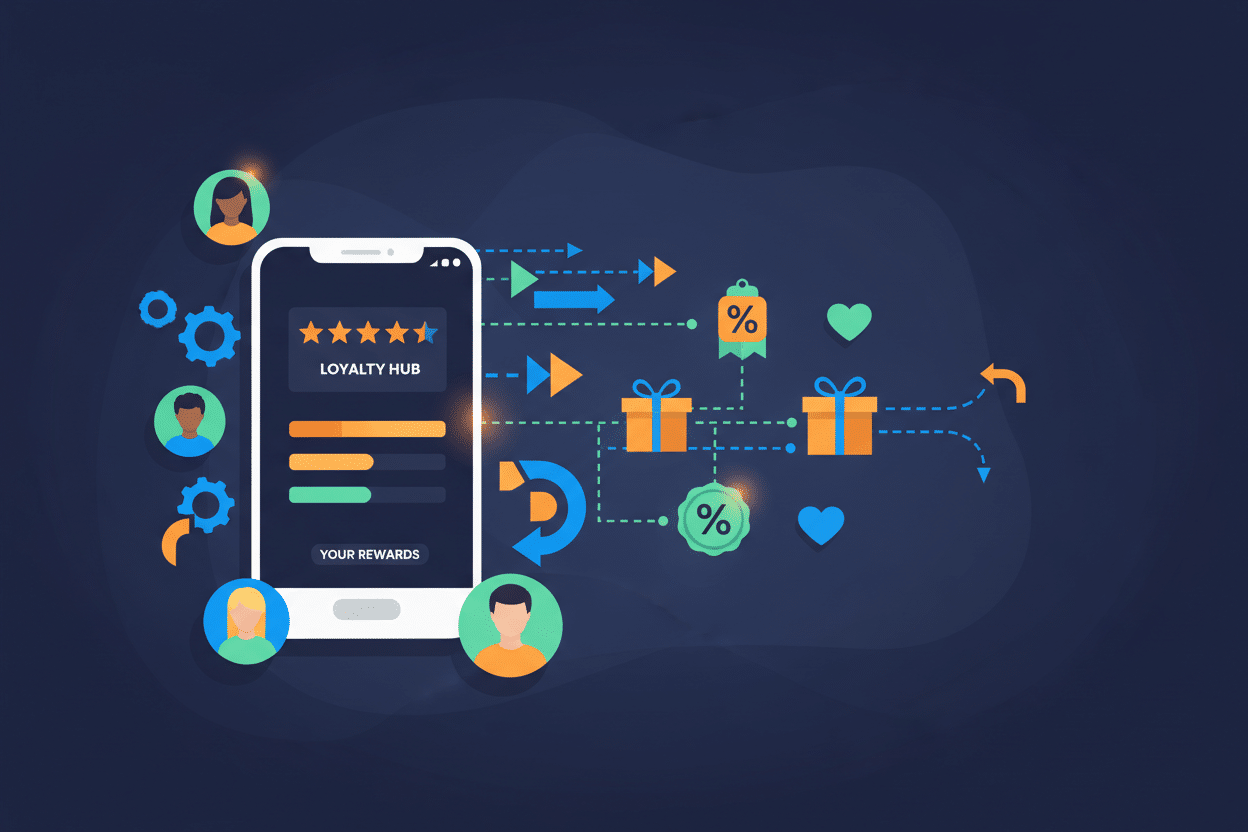
Think of it as building with digital Lego blocks. Each block represents a different action or trigger – when a customer makes a purchase, send them points; when they reach a milestone, trigger a personalized email; when they haven’t engaged in 30 days, initiate a win-back campaign. The possibilities are virtually endless, and the best part? You can set it up yourself.
Traditional loyalty programs often suffer from rigidity. They’re built once and rarely updated, leading to stagnant customer experiences. No-code automation changes this by allowing you to continuously refine and personalize your approach based on real customer behavior and preferences.
Key Benefits of Automated Customer Loyalty Systems ✨
The advantages of implementing no-code automation in your loyalty program extend far beyond simple convenience. First and foremost, you’ll see dramatic improvements in personalization. Automated systems can track individual customer preferences, purchase history, and engagement patterns to deliver tailored experiences that feel genuinely personal rather than mass-marketed.
Cost efficiency represents another major benefit. Traditional custom development for loyalty programs can cost tens of thousands of dollars and take months to implement. No-code solutions often require minimal upfront investment and can be deployed in days or weeks rather than months.
Real-time responsiveness sets automated loyalty programs apart from their manual counterparts. When a customer performs an action, the system can respond instantly with appropriate rewards, communications, or next-step suggestions. This immediacy creates a sense of connection and appreciation that manual programs simply cannot match.
Scalability becomes effortless with automation. Whether you have 100 customers or 100,000, the system handles each interaction with the same level of attention and consistency. This means your loyalty program can grow alongside your business without requiring proportional increases in staff or resources.
Essential No-Code Tools for Loyalty Program Management 🛠️
Selecting the right no-code platform forms the foundation of your automated loyalty program success. Zapier stands out as one of the most versatile options, connecting thousands of different apps and services. You can easily integrate your e-commerce platform, email marketing tools, and customer database to create seamless automated workflows.
Microsoft Power Automate offers robust capabilities for businesses already invested in the Microsoft ecosystem. Its deep integration with Office 365, Dynamics, and other Microsoft products makes it particularly attractive for enterprises looking to leverage existing infrastructure.
For those seeking more specialized loyalty program features, platforms like Smile.io and LoyaltyLion provide no-code interfaces specifically designed for customer retention. These tools come pre-built with common loyalty program mechanics while still offering extensive customization through automation.
Integromat (now Make) deserves special mention for its sophisticated logic capabilities. While slightly more complex than some alternatives, it allows for intricate conditional workflows that can handle even the most nuanced loyalty program requirements.
Step-by-Step Implementation Strategies 📋
Beginning your no-code loyalty automation journey requires careful planning and systematic execution. Start by mapping your current customer journey and identifying key touchpoints where automation can add value. These might include welcome sequences for new customers, milestone celebrations, or re-engagement campaigns for inactive members.
Your first automation should be simple but impactful. Consider implementing an automated welcome series that triggers when someone joins your loyalty program. This might include a welcome email with their initial bonus points, followed by educational content about program benefits, and finally a personalized product recommendation based on their signup preferences.
Data integration represents the next crucial step. Ensure your no-code platform can access customer information from your primary systems – your e-commerce platform, CRM, and email marketing tools. Most no-code platforms offer pre-built connectors for popular services, making this process straightforward.
Testing becomes paramount before launching any automated workflow. Start with a small segment of your customer base and monitor results closely. Pay attention to both technical performance and customer response rates. This controlled approach allows you to refine your automation before rolling it out to your entire customer base.
Advanced Automation Techniques for Maximum Engagement 🎨
Once you’ve mastered basic automation workflows, advanced techniques can significantly amplify your loyalty program’s effectiveness. Behavioral segmentation automation allows you to categorize customers based on their actions and preferences, then deliver highly targeted experiences to each segment.
Consider implementing predictive automation that anticipates customer needs. For example, if a customer typically reorders a consumable product every 30 days, your automation can send a reminder email on day 25 with a special loyalty discount, increasing the likelihood of repeat purchase while demonstrating attentiveness to their needs.
Cross-channel orchestration takes automation to the next level by coordinating touchpoints across multiple platforms. A customer might earn points through a mobile app purchase, receive an email celebration, see a personalized offer on social media, and get a follow-up SMS with their updated point balance – all triggered automatically from that single purchase event.
Dynamic reward adjustment represents another powerful advanced technique. Instead of static point values, your automation can adjust rewards based on factors like customer lifetime value, recent engagement levels, or inventory needs. High-value customers might automatically receive bonus point multipliers, while dormant customers could get enhanced rewards to encourage re-engagement.
Measuring Success and Optimizing Performance 📊
Effective measurement forms the backbone of any successful automated loyalty program. Key performance indicators should extend beyond simple enrollment numbers to include engagement metrics, redemption rates, and customer lifetime value improvements.
Customer retention rate serves as your primary success metric. Compare retention rates before and after implementing automation to quantify its impact. Additionally, track the time between purchases – successful loyalty automation typically reduces this interval as customers become more engaged with your brand.
Engagement depth provides insight into how well your automation resonates with customers. Monitor email open rates, click-through rates on loyalty communications, and the percentage of customers who interact with automated touchpoints. These metrics reveal whether your automation feels valuable or intrusive to recipients.
Revenue attribution helps justify your automation investment. Track the revenue generated specifically through loyalty program interactions and automated campaigns. Many no-code platforms provide built-in analytics that make this tracking straightforward.
Continuous optimization should be built into your automation strategy from the beginning. Set up A/B testing workflows to compare different messaging approaches, reward structures, or timing strategies. The beauty of no-code platforms is that you can quickly implement and test variations without technical overhead.
Common Pitfalls and How to Avoid Them ⚠️
Over-automation represents one of the most frequent mistakes in no-code loyalty program implementation. While automation capabilities are exciting, bombarding customers with constant automated messages can quickly become counterproductive. Focus on quality over quantity, ensuring each automated touchpoint provides genuine value.
Data quality issues can undermine even the most sophisticated automation workflows. Ensure your customer data is clean, complete, and regularly updated. Automated systems amplify data problems – a single incorrect email address or preference setting can result in numerous failed or inappropriate communications.
Neglecting the human element poses another significant risk. While automation handles routine interactions efficiently, complex customer service issues or unique situations still require human intervention. Build escalation paths into your automation workflows to ensure customers can easily reach human support when needed.
Platform dependency can become problematic if you build your entire loyalty program around a single no-code tool. Consider how you might migrate or adapt your automation if your chosen platform changes its pricing, features, or availability. Maintaining some level of platform flexibility protects your long-term investment.
Conclusion: Transforming Customer Relationships Through Smart Automation 🌟
No-code automation represents a game-changing opportunity for businesses looking to elevate their customer loyalty programs without massive technical investments. By thoughtfully implementing automated workflows, you can create personalized, responsive, and scalable loyalty experiences that genuinely strengthen customer relationships.
The key to success lies in starting simple, measuring consistently, and optimizing continuously. Remember that automation should enhance rather than replace human connection – use these tools to free up time for meaningful customer interactions while ensuring routine touchpoints happen reliably and personally.
As you embark on your no-code automation journey, focus on solving real customer problems and creating genuine value at each touchpoint. When done right, automated loyalty programs don’t feel automated at all – they feel like a brand that truly understands and appreciates its customers.
Frequently Asked Questions 🤔
How much does it cost to implement no-code automation for loyalty programs?
Most no-code platforms offer tiered pricing starting from $20-50 per month for basic automation capabilities. Costs scale based on the number of automations, customer contacts, and advanced features you need. This represents significant savings compared to custom development, which typically costs $10,000-50,000+ for similar functionality.
Do I need technical skills to set up automated loyalty programs?
No technical coding skills are required, though basic familiarity with digital marketing concepts helps. Most no-code platforms use visual drag-and-drop interfaces that are intuitive for non-technical users. Many platforms also provide templates and tutorials specifically for loyalty program automation.
How long does it take to implement no-code loyalty automation?
Simple automation workflows can be set up in a few hours, while comprehensive loyalty program automation typically takes 1-2 weeks to implement and test thoroughly. This timeline assumes you have your customer data organized and your goals clearly defined.
Can no-code automation integrate with my existing loyalty program platform?
Most major loyalty program platforms offer API connections that work with popular no-code tools. Check your current platform’s integration capabilities and ensure your chosen no-code tool supports the necessary connectors before beginning implementation.
What happens if my automation makes a mistake or sends incorrect information?
No-code platforms typically include testing environments and approval workflows to minimize errors. However, mistakes can happen. Build monitoring and rollback capabilities into your workflows, and always include clear contact information for customers to report issues. Most platforms also provide activity logs to help identify and correct problems quickly.
Click Here For More Details