How No-Code Automation Software is Bridging the Gap Between IT and Business Teams 🚀
Remember the days when asking IT for a simple workflow automation meant waiting weeks for a response, only to be told it would take months to develop? Those frustrating scenarios are becoming increasingly rare, thanks to the revolutionary rise of no-code automation software. This game-changing technology is finally bridging the notorious gap between IT departments and business teams, creating a harmonious workspace where innovation thrives without technical barriers.
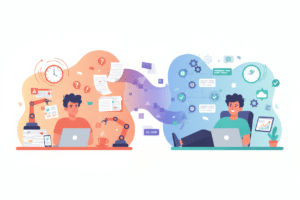
The traditional divide between IT and business teams has long been a source of organizational friction. Business professionals knew exactly what they needed to streamline their processes, while IT teams understood the technical complexities but often lacked the context of day-to-day business operations. No-code automation platforms have emerged as the perfect translator, speaking both languages fluently and enabling collaboration like never before.
Understanding the Traditional IT-Business Divide 💼
For decades, organizations have struggled with what many call the “IT-business alignment problem.” Business teams would identify inefficiencies, bottlenecks, and opportunities for automation, but translating these needs into technical requirements often felt like playing a complex game of telephone. The result? Misaligned priorities, delayed projects, and solutions that didn’t quite hit the mark.
IT departments, overwhelmed with technical debt and security concerns, often viewed business requests as additional burden on their already stretched resources. Meanwhile, business teams felt frustrated by lengthy development cycles and solutions that seemed disconnected from their actual needs. This disconnect wasn’t anyone’s fault – it was simply the natural consequence of different perspectives, priorities, and skill sets.

The emergence of shadow IT became a common response, with business teams seeking third-party tools to solve their problems independently. While this provided short-term relief, it created new challenges around data security, compliance, and system integration. Organizations needed a better way forward.
The No-Code Revolution: Democratizing Automation 🔧
No-code automation software represents a fundamental shift in how organizations approach process improvement and digital transformation. These platforms provide intuitive, visual interfaces that allow non-technical users to create sophisticated workflows, automate repetitive tasks, and integrate various business applications without writing a single line of code.
What makes no-code platforms truly revolutionary is their ability to empower business users while maintaining the security and governance standards that IT teams require. Modern no-code solutions offer enterprise-grade features like role-based access controls, audit trails, and compliance frameworks, ensuring that business-led automation initiatives don’t compromise organizational security.
The visual, drag-and-drop nature of these platforms means that business professionals can prototype and iterate on automation ideas quickly. Instead of spending weeks documenting requirements and waiting for development resources, they can build working prototypes in hours or days, demonstrating exactly what they need and how it should function.
Breaking Down Communication Barriers Through Visual Development 👥
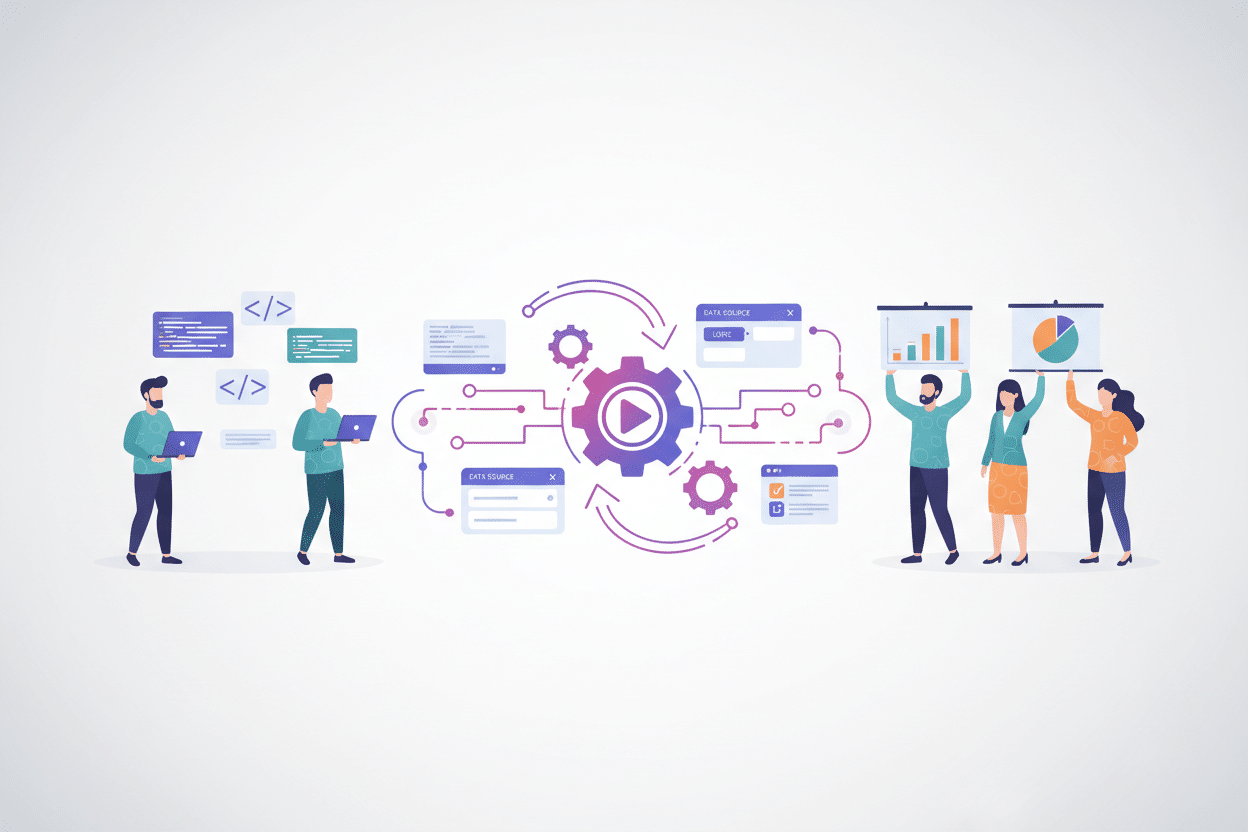
One of the most significant ways no-code automation bridges the IT-business gap is by creating a shared visual language. Traditional software development relies heavily on technical documentation, code reviews, and abstract concepts that can be difficult for non-technical stakeholders to fully grasp. No-code platforms transform these abstract concepts into visual workflows that anyone can understand.
When a marketing manager wants to automate lead nurturing processes, they can now build a visual workflow that clearly shows how leads move through different stages, what triggers specific actions, and how data flows between systems. IT teams can immediately see the logic, identify potential security considerations, and suggest improvements – all while looking at the same visual representation.
This shared understanding dramatically reduces the back-and-forth communication that traditionally plagued IT-business collaborations. Instead of lengthy email chains trying to clarify requirements, teams can point to specific elements in a visual workflow and discuss modifications in real-time. The result is faster iteration, better alignment, and solutions that truly meet business needs.
Empowering Business Users Without Compromising IT Governance 🛡️
A common concern among IT leaders is that empowering business users to create their own automation might lead to security vulnerabilities or compliance issues. Modern no-code platforms address these concerns head-on by providing robust governance frameworks that give IT teams oversight and control while enabling business innovation.
These platforms typically include features like centralized administration dashboards, where IT teams can monitor all automation activities across the organization. They can set up approval workflows for certain types of automations, establish data access policies, and maintain security standards without stifling business innovation.
Many no-code platforms also provide template libraries and best practice guidelines, helping business users create automations that align with organizational standards from the start. This proactive approach to governance means fewer security reviews and faster deployment of business-critical automations.
Real-World Success Stories: When IT and Business Teams Collaborate 📈
The impact of no-code automation on IT-business collaboration becomes clear when we examine real-world implementations. Consider a global manufacturing company where the finance team needed to automate invoice processing. Traditionally, this would have required a six-month development project involving multiple IT resources.
With no-code automation, the finance team built a working prototype in two days. They demonstrated the workflow to IT, who identified some security enhancements and suggested integrations with existing systems. Within two weeks, they had deployed a production-ready solution that processed thousands of invoices monthly, reducing manual work by 80%.
Another example involves a healthcare organization where nurses needed to automate patient follow-up communications. The nursing staff understood exactly what information needed to be communicated and when, but lacked the technical skills to build the solution. Using a no-code platform, they created the automation logic while IT handled the integration with patient management systems and ensured HIPAA compliance.
These success stories share common themes: rapid prototyping by business users, collaborative refinement with IT input, and faster deployment of solutions that truly address business needs.
The Future of IT-Business Collaboration in the No-Code Era 🔮
As no-code automation platforms continue to evolve, we’re seeing the emergence of new collaboration models that would have been impossible just a few years ago. IT teams are transitioning from being the sole creators of business solutions to becoming enablers and advisors, helping business teams leverage technology more effectively.
This shift is creating new opportunities for career development on both sides. Business professionals are developing technical skills that make them more valuable contributors to digital transformation initiatives. IT professionals are gaining deeper insights into business operations, making them more strategic partners rather than just service providers.
The future likely holds even more sophisticated no-code platforms with artificial intelligence capabilities, advanced analytics, and seamless integration with emerging technologies like IoT and machine learning. These developments will further democratize technology while maintaining the governance and security standards that enterprises require.
Getting Started: Best Practices for Organizations 🎯
Organizations looking to leverage no-code automation to bridge their IT-business gap should start with a collaborative approach. Begin by identifying high-impact, low-risk processes that could benefit from automation. Involve both IT and business stakeholders in the evaluation of no-code platforms, ensuring that chosen solutions meet both functional and security requirements.
Establish clear governance frameworks from the beginning, defining roles and responsibilities for automation development, deployment, and maintenance. Create centers of excellence that include representatives from both IT and business teams, fostering knowledge sharing and best practice development.
Invest in training and change management to help teams adapt to new ways of working. The most successful implementations are those where organizations view no-code automation not just as a technology solution, but as a catalyst for cultural transformation toward greater collaboration and innovation.
Conclusion: A New Era of Collaborative Innovation ✨
No-code automation software isn’t just changing how we build business solutions – it’s fundamentally transforming how IT and business teams work together. By providing a common language, empowering business users, and maintaining necessary governance controls, these platforms are creating unprecedented opportunities for collaborative innovation.
The organizations that embrace this shift will find themselves better positioned to respond to market changes, improve operational efficiency, and drive digital transformation initiatives. The gap between IT and business teams doesn’t have to be a permanent fixture of organizational life. With the right tools and approach, it can become a bridge to greater collaboration, innovation, and success.
As we move forward into an increasingly digital future, the ability to rapidly adapt and automate business processes will become a critical competitive advantage. No-code automation platforms are making this capability accessible to organizations of all sizes, democratizing innovation and creating new possibilities for what businesses can achieve when technology truly serves their needs.
Click Here For More Details