The Role of No-Code Automation in Enhancing Digital Marketing Campaigns
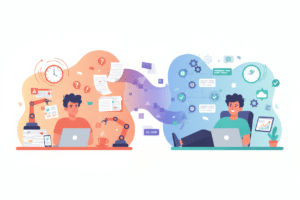
Remember the days when setting up a simple email automation sequence required a computer science degree? Those days are long gone, my friend! 🚀 Welcome to the era of no-code automation, where marketers like you and me can build sophisticated campaigns without writing a single line of code. It’s like having superpowers, but instead of flying or reading minds, you’re creating marketing magic that works while you sleep.
No-code automation has revolutionized how we approach digital marketing campaigns. It’s democratized technology, putting powerful tools in the hands of creative marketers who understand their audience but might not know the difference between JavaScript and Java (and honestly, who has time to learn when there are campaigns to run?). This shift isn’t just changing individual workflows – it’s transforming entire marketing departments and helping businesses of all sizes compete on a level playing field.
Table of Contents
• Understanding No-Code Automation in Digital Marketing
• Key Benefits of No-Code Marketing Automation
• Popular No-Code Automation Tools for Marketers
• Real-World Applications and Use Cases
• Getting Started with No-Code Marketing Automation
• Overcoming Common Challenges
• Future Trends in No-Code Marketing Technology
• FAQs
Understanding No-Code Automation in Digital Marketing
Let’s start with the basics. No-code automation refers to platforms and tools that allow users to create automated workflows, processes, and applications using visual interfaces instead of traditional programming. Think drag-and-drop functionality, pre-built templates, and intuitive design elements that make sense to human brains, not just computer processors.
In the context of digital marketing, this means you can set up complex customer journeys, automate social media posting, create dynamic email campaigns, and integrate multiple platforms without needing a developer on speed dial. It’s like having a Swiss Army knife for marketing – versatile, reliable, and surprisingly powerful once you know how to use it properly.
The beauty of no-code automation lies in its accessibility. While traditional marketing automation required significant technical knowledge and often substantial budgets for custom development, no-code solutions have lowered the barrier to entry dramatically. Small businesses can now implement sophisticated marketing strategies that were once exclusive to enterprise-level organizations with dedicated IT teams.
Key Benefits of No-Code Marketing Automation
Speed and Efficiency That Actually Matters
Time is money, especially in marketing where trends change faster than fashion seasons. No-code automation allows you to implement campaigns in hours instead of weeks. I’ve personally seen marketing teams go from idea to execution in the same afternoon – something that would have taken months of development cycles in the past.
This speed isn’t just about getting things done faster; it’s about staying relevant. When you can quickly test new strategies, adapt to market changes, and respond to customer behavior in real-time, you’re not just keeping up with the competition – you’re staying ahead of it.
Cost-Effectiveness Without Compromise
Let’s talk numbers for a moment. Traditional marketing automation often requires significant upfront investment in software licenses, development costs, and ongoing maintenance. No-code solutions typically operate on subscription models that scale with your business, making them accessible to startups and small businesses while still powerful enough for enterprise needs.
Moreover, the reduced need for technical specialists means your existing marketing team can handle implementation and management. This isn’t just about saving money on developers – it’s about empowering your marketing team to be more self-sufficient and responsive.
Enhanced Personalization at Scale
Here’s where things get really exciting. No-code automation platforms excel at creating personalized customer experiences based on behavior, preferences, and engagement patterns. You can set up triggers that respond to specific actions, segment audiences dynamically, and deliver targeted content that feels personally crafted for each recipient.
The result? Higher engagement rates, improved customer satisfaction, and ultimately, better ROI on your marketing efforts. It’s like having a personal assistant for each of your customers, but one that never sleeps and never forgets important details.
Popular No-Code Automation Tools for Marketers
Email Marketing Powerhouses
Email automation remains the backbone of digital marketing, and no-code platforms have made it incredibly sophisticated. Tools like Mailchimp, ConvertKit, and ActiveCampaign offer visual workflow builders that let you create complex email sequences based on user behavior, purchase history, and engagement levels.
These platforms go beyond simple autoresponders. You can create branching logic that sends different content based on how recipients interact with your emails, set up win-back campaigns for inactive subscribers, and even integrate with e-commerce platforms to send personalized product recommendations.
Social Media Management Solutions
Managing multiple social media accounts can feel like juggling flaming torches while riding a unicycle. No-code automation tools like Hootsuite, Buffer, and Later simplify this process by allowing you to schedule posts, respond to mentions automatically, and even curate content based on trending topics in your industry.
The real magic happens when these tools integrate with other platforms. Imagine automatically sharing your latest blog post across all social channels, complete with platform-specific formatting and hashtags, all triggered by publishing the post on your website.
Customer Relationship Management Integration
No-code CRM automation has transformed how businesses nurture leads and maintain customer relationships. Platforms like HubSpot, Pipedrive, and Zoho offer visual pipeline builders that can automatically move prospects through your sales funnel based on their actions and engagement levels.
These systems can trigger follow-up emails, assign leads to sales representatives, schedule callbacks, and even update customer records automatically. It’s like having a incredibly organized assistant who never forgets to follow up and always knows exactly where each prospect stands in your sales process.
Real-World Applications and Use Cases
E-commerce Marketing Automation
Online retailers have perhaps benefited most from no-code automation. Consider the typical e-commerce customer journey: someone visits your site, browses products, maybe adds items to their cart, but then leaves without purchasing. With no-code automation, you can set up a sequence that sends a gentle reminder email after 24 hours, offers a small discount after 48 hours, and provides social proof through customer reviews after 72 hours.
But it doesn’t stop there. Post-purchase automation can request reviews, suggest complementary products, and even predict when customers might need to reorder consumable items. It’s like having a crystal ball that helps you anticipate customer needs and respond accordingly.
Lead Nurturing and Scoring
B2B marketers have found no-code automation particularly valuable for lead nurturing. You can create sophisticated scoring systems that assign points based on various actions – downloading a whitepaper, attending a webinar, visiting pricing pages, or engaging with sales emails.
When a lead reaches a certain score threshold, the system can automatically notify your sales team, add the prospect to a high-priority list, or trigger a personalized outreach sequence. It’s like having a radar system that identifies the hottest prospects and ensures they receive appropriate attention at the right time.
Event Marketing and Webinar Automation
Event marketing involves numerous touchpoints, from initial registration to post-event follow-up. No-code automation can handle the entire sequence: sending confirmation emails, reminder sequences leading up to the event, follow-up surveys, and even segmenting attendees based on their engagement level during the event.
For webinars specifically, you can set up different automation paths for attendees versus no-shows, providing replay links to those who missed it while sending additional resources to engaged participants.
Getting Started with No-Code Marketing Automation
Identifying Your Automation Opportunities
Before diving into tools and platforms, take a step back and audit your current marketing processes. Where are you spending repetitive time on manual tasks? Which customer touchpoints could benefit from more timely or personalized responses? These pain points are your automation opportunities.
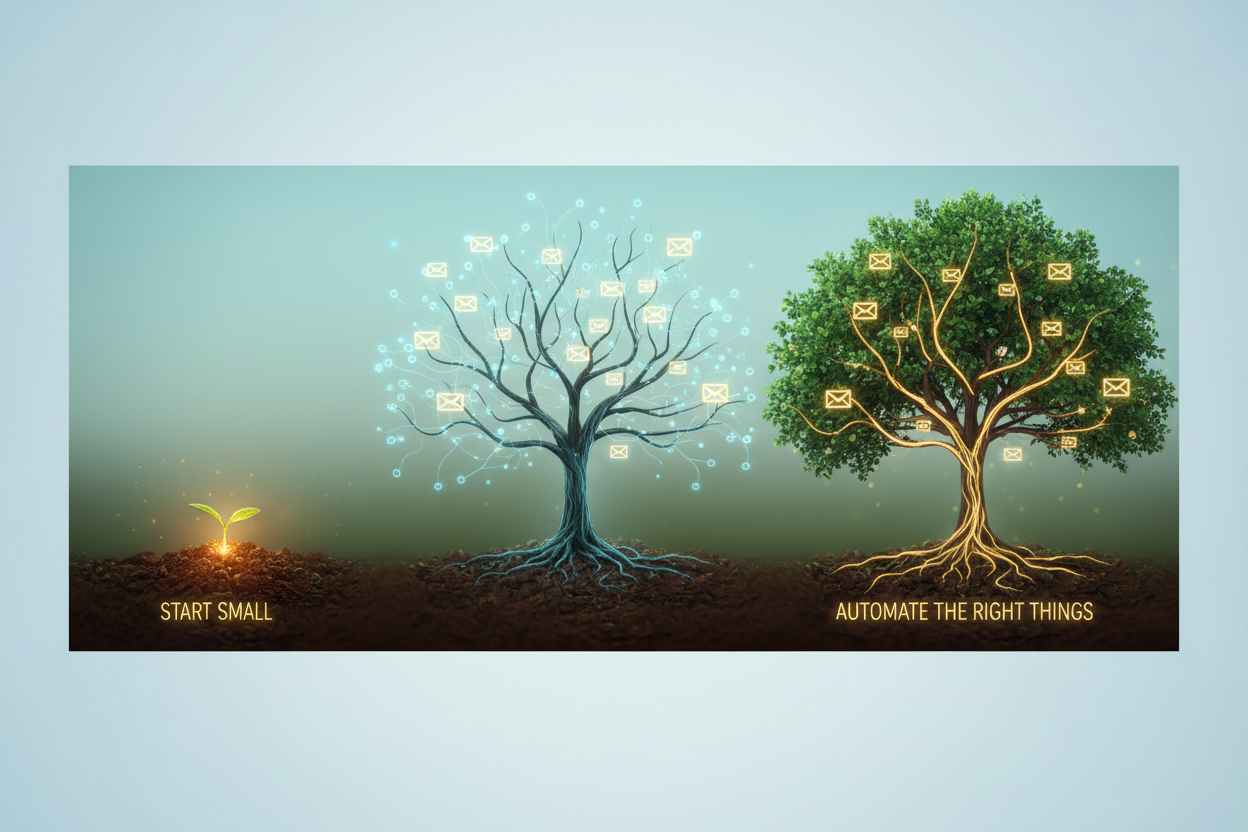
Start small and think big. Maybe begin with a simple welcome email series for new subscribers, then gradually expand to more complex workflows as you become comfortable with the platform. Remember, the goal isn’t to automate everything – it’s to automate the right things that will have the biggest impact on your results.
Choosing the Right Platform
Not all no-code automation platforms are created equal, and the best choice depends on your specific needs, budget, and existing tech stack. Consider factors like ease of use, integration capabilities, scalability, and support quality when making your decision.
Most platforms offer free trials or freemium versions, so don’t hesitate to test multiple options before committing. What works perfectly for one business might feel clunky for another, and there’s no substitute for hands-on experience when evaluating these tools.
Building Your First Automation
When creating your first automation, resist the urge to build something overly complex. Start with a simple, linear workflow that addresses a specific customer need or business goal. A basic email welcome series or abandoned cart recovery sequence are excellent starting points.
Focus on mapping out the customer experience first, then worry about the technical implementation. What should happen when someone takes a specific action? What information do they need at each stage? How can you provide value while moving them toward your desired outcome?
Overcoming Common Challenges
Avoiding Over-Automation
One of the biggest mistakes I see marketers make is trying to automate everything. While automation is powerful, it shouldn’t replace genuine human connection entirely. The key is finding the right balance between efficiency and authenticity.
Always ask yourself: “Would this interaction be better handled by a human?” Customer complaints, complex questions, and high-value prospects often require personal attention that automation simply can’t provide. Use automation to handle routine tasks and initial touchpoints, but be ready to hand off to humans when appropriate.
Maintaining Data Quality
Automation is only as good as the data feeding it. Poor data quality can lead to embarrassing mistakes – like sending “welcome back” emails to new customers or promoting products that are out of stock. Regularly audit your data sources and set up validation rules to catch errors before they impact customer experience.
Consider implementing data hygiene automation as well. Set up processes to update contact information, remove invalid email addresses, and flag duplicate records. Clean data isn’t just about avoiding mistakes – it’s about ensuring your automation delivers relevant, timely experiences.
Testing and Optimization
No-code automation makes it easy to set up campaigns, but don’t forget about ongoing optimization. Regularly review your automation performance, test different messaging approaches, and adjust timing based on engagement data.
A/B testing becomes particularly powerful with automation because you can test not just individual emails or messages, but entire workflow sequences. Maybe version A of your welcome series performs better initially, but version B generates more long-term engagement. These insights can significantly impact your overall marketing effectiveness.
Future Trends in No-Code Marketing Technology
Artificial Intelligence Integration
The next frontier in no-code automation involves AI and machine learning capabilities that don’t require data science expertise to implement. We’re already seeing platforms that can automatically optimize send times, predict customer lifetime value, and even generate content variations for testing.
Imagine automation that learns from customer behavior patterns and adjusts campaigns in real-time without manual intervention. This isn’t science fiction – it’s happening now, and it’s becoming more accessible to marketers every day.
Cross-Platform Integration
The future of no-code automation lies in seamless integration across all marketing channels and customer touchpoints. We’re moving toward unified platforms that can orchestrate experiences across email, social media, SMS, push notifications, and even offline interactions.
This omnichannel approach will enable marketers to create truly cohesive customer journeys that adapt based on individual preferences and behaviors across all interaction points.
No-code automation has fundamentally changed the digital marketing landscape, making sophisticated campaign management accessible to marketers regardless of their technical background. It’s not just about doing things faster or cheaper – it’s about doing them better, with more personalization, better timing, and greater relevance to your audience.
The key to success lies in starting with clear objectives, choosing the right tools for your specific needs, and maintaining a balance between automation efficiency and human authenticity. As these platforms continue to evolve and incorporate AI capabilities, the possibilities for creative, effective marketing campaigns will only expand.
Whether you’re a solo entrepreneur looking to compete with larger competitors or part of a marketing team seeking to scale your efforts, no-code automation offers the tools and capabilities to transform your digital marketing campaigns. The question isn’t whether you should embrace this technology – it’s how quickly you can start leveraging it to create better experiences for your customers and better results for your business. 🎯
Frequently Asked Questions
What is no-code automation in digital marketing?
No-code automation refers to marketing tools and platforms that allow users to create automated workflows, campaigns, and processes using visual interfaces instead of programming code. These tools use drag-and-drop functionality and pre-built templates to make automation accessible to non-technical marketers.
Do I need technical skills to use no-code automation tools?
No, that’s the beauty of no-code platforms! They’re specifically designed for users without programming backgrounds. Most platforms offer intuitive interfaces, tutorials, and customer support to help you get started. Basic computer skills and marketing knowledge are typically sufficient.
How much does no-code marketing automation cost?
Costs vary widely depending on the platform and features you need. Many tools offer free tiers for basic functionality, with paid plans typically ranging from $20-200+ per month based on contact lists, features, and usage limits. Enterprise solutions can cost more but often provide better ROI through increased efficiency.
Can no-code automation replace my entire marketing team?
No, automation should complement human expertise, not replace it. While automation excels at routine tasks, data processing, and consistent communication, human creativity, strategy, and relationship building remain essential for successful marketing campaigns.
What’s the best no-code automation tool for beginners?
Popular beginner-friendly options include Mailchimp for email automation, Hootsuite for social media, and Zapier for connecting different apps. The best choice depends on your specific needs, budget, and existing tools. Most platforms offer free trials, so you can test before committing.
How do I measure the success of my automated campaigns?
Key metrics include open rates, click-through rates, conversion rates, customer lifetime value, and overall ROI. Most no-code platforms provide built-in analytics dashboards. Focus on metrics that align with your specific business goals rather than vanity metrics that look good but don’t drive results.
Click Here For More Details