

The Impact of No-Code Automation on Streamlining Financial Reporting 📊
Table of Contents
• Introduction to No-Code Financial Automation
• Understanding Traditional Financial Reporting Challenges
• How No-Code Automation Transforms Financial Processes
• Key Benefits of No-Code Financial Reporting Solutions
• Real-World Applications and Use Cases
• Choosing the Right No-Code Platform for Financial Reporting
• Implementation Best Practices
• Future Trends in Automated Financial Reporting
• Conclusion
• Frequently Asked Questions
Introduction: The Financial Reporting Revolution is Here 🚀
Picture this: It’s month-end, and instead of drowning in spreadsheets and manual data entry, your financial reports generate themselves automatically, complete with real-time insights and error-free calculations. Sound too good to be true? Welcome to the world of no-code automation for financial reporting.
As someone who’s witnessed countless finance professionals burn the midnight oil wrestling with Excel formulas and chasing down missing data, I can tell you that the traditional approach to financial reporting is not just outdated—it’s practically archaic. The emergence of no-code automation platforms has fundamentally changed how businesses approach financial reporting, making sophisticated automation accessible to finance teams without requiring a computer science degree.
In this comprehensive guide, we’ll explore how no-code automation is revolutionizing financial reporting, transforming what was once a tedious, error-prone process into a streamlined, accurate, and insightful operation that actually adds strategic value to your business.
Understanding Traditional Financial Reporting Challenges 😰
Before we dive into the solution, let’s acknowledge the elephant in the room. Traditional financial reporting has been plagued by numerous challenges that have frustrated finance professionals for decades.
Manual data entry remains one of the biggest pain points. Finance teams often spend countless hours copying and pasting data from various systems, creating a perfect storm for human error. I’ve seen experienced accountants make simple transcription mistakes that led to significant discrepancies in financial statements—mistakes that could have been easily avoided with automation.
Time consumption is another major issue. What should be a strategic function often becomes a race against time to meet reporting deadlines. Finance professionals find themselves working overtime during closing periods, sacrificing analysis and insights for basic data compilation.
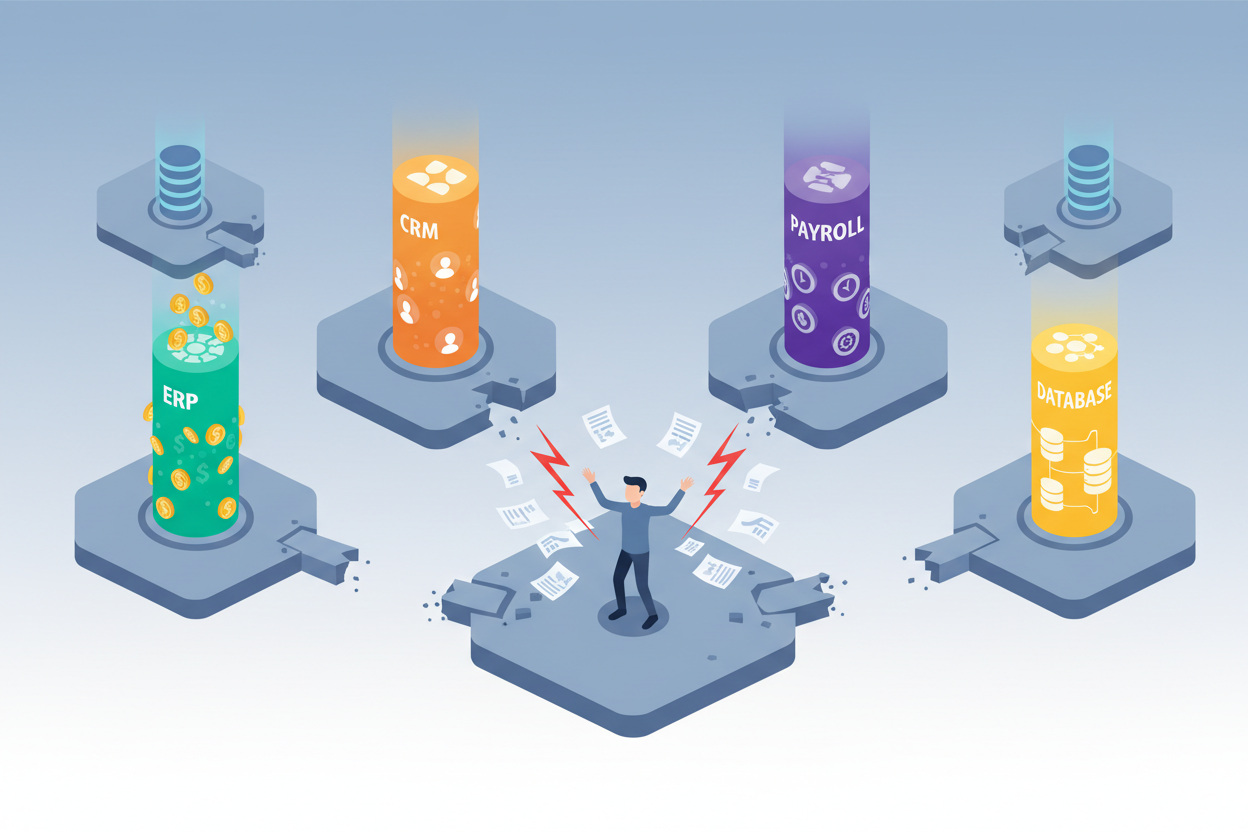
Data silos present yet another challenge. Financial information often lives in multiple systems—your ERP, CRM, payroll system, and various databases—making it nearly impossible to get a unified view without significant manual intervention. This fragmentation not only slows down the reporting process but also increases the risk of inconsistencies.
Version control issues plague teams that rely heavily on spreadsheets. How many times have you wondered whether you’re working with the latest version of a financial model? Multiple versions floating around via email create confusion and potential errors in final reports.
How No-Code Automation Transforms Financial Processes ⚡
No-code automation platforms have emerged as game-changers in the financial reporting landscape. These tools allow finance professionals to create sophisticated automated workflows without writing a single line of code.
The beauty of no-code solutions lies in their visual, drag-and-drop interfaces. Instead of struggling with complex programming languages, users can simply connect different data sources, define business rules, and set up automated processes using intuitive visual builders. It’s like having a personal developer who speaks your language—finance.
These platforms excel at data integration, seamlessly connecting disparate systems and creating a single source of truth for financial information. Whether you’re pulling data from QuickBooks, Salesforce, or your custom ERP system, no-code tools can establish real-time connections that keep your reports always up-to-date.
Workflow automation is where these tools really shine. You can set up complex approval processes, automatic report generation schedules, and even trigger alerts when certain financial thresholds are met. The system becomes your tireless assistant, working 24/7 to keep your financial reporting on track.
Key Benefits of No-Code Financial Reporting Solutions 💰
The advantages of implementing no-code automation in financial reporting extend far beyond just saving time. Let me walk you through the most significant benefits that organizations are experiencing.
Accuracy improvement is perhaps the most immediate benefit. By eliminating manual data entry and reducing human touchpoints, no-code automation dramatically reduces the risk of errors. I’ve worked with companies that saw error rates drop by over 90% after implementing automated financial reporting processes.
Speed enhancement is another remarkable advantage. What used to take days or weeks can now be accomplished in hours or even minutes. Automated data collection, calculation, and report generation mean that finance teams can focus on analysis rather than data preparation.
Cost reduction becomes evident quickly. While there’s an initial investment in the no-code platform, the reduction in manual labor hours and the elimination of error-related costs typically result in significant savings within the first year of implementation.
Scalability is a often-overlooked benefit that becomes crucial as businesses grow. No-code solutions can easily accommodate increasing data volumes and additional reporting requirements without requiring proportional increases in staff or resources.
Real-time insights become possible when your reporting processes are automated. Instead of waiting for month-end closes, decision-makers can access up-to-date financial information whenever they need it, enabling more agile business decisions.
Real-World Applications and Use Cases 🌟
Let me share some concrete examples of how organizations are leveraging no-code automation for financial reporting.
Monthly financial closes have been transformed in countless organizations. Instead of the traditional week-long scramble to compile financial statements, automated processes can generate preliminary reports within hours of month-end. One mid-sized manufacturing company I consulted with reduced their closing cycle from 15 days to just 3 days using no-code automation.
Budget variance analysis has become much more sophisticated and timely. Automated systems can continuously monitor actual performance against budgets and generate variance reports with detailed explanations and trend analysis. This enables proactive management rather than reactive responses to budget deviations.
Cash flow forecasting has been revolutionized through automated data collection from multiple sources. By integrating accounts receivable, payable, and sales pipeline data, organizations can generate accurate cash flow projections that update automatically as underlying data changes.
Compliance reporting has become less stressful with automated audit trails and standardized report formats. Regulatory reports that once required extensive manual preparation can now be generated automatically, complete with supporting documentation and approval workflows.
Choosing the Right No-Code Platform for Financial Reporting 🎯
Selecting the appropriate no-code platform for your financial reporting needs requires careful consideration of several factors. Not all platforms are created equal, and what works for one organization might not be the best fit for another.
Integration capabilities should be your top priority. The platform must be able to connect with your existing financial systems seamlessly. Look for platforms that offer pre-built connectors to popular accounting software, ERPs, and databases. The easier the integration, the faster your implementation will be.
Security features cannot be compromised when dealing with financial data. Ensure the platform offers enterprise-grade security, including data encryption, role-based access controls, and compliance with relevant financial regulations like SOX or GDPR.
Scalability considerations are crucial for growing businesses. The platform should be able to handle increasing data volumes and user counts without performance degradation. Cloud-based solutions typically offer better scalability than on-premise alternatives.
User-friendliness determines adoption success. If your finance team finds the platform difficult to use, even the most powerful features won’t deliver value. Look for platforms with intuitive interfaces and comprehensive training resources.
Support and documentation quality can make or break your implementation. Choose vendors that offer robust customer support, detailed documentation, and active user communities where you can get help when needed.
Implementation Best Practices for Success 📋
Successfully implementing no-code automation for financial reporting requires more than just selecting the right platform. Here are the best practices that separate successful implementations from disappointing ones.
Start small and scale gradually. Don’t try to automate everything at once. Begin with a single, well-defined process like monthly revenue reporting or expense categorization. Once you’ve proven success and built confidence, expand to more complex processes.
Involve your team from the beginning. Change management is crucial for successful automation adoption. Include key finance team members in the platform selection and design process. Their buy-in and input will be invaluable for creating processes that actually work in practice.
Document your current processes thoroughly before automation. You can’t improve what you don’t understand. Map out your existing workflows, identify pain points, and define clear objectives for improvement. This documentation will serve as your blueprint for automation design.
Establish data governance standards early. Automated systems are only as good as the data they process. Create clear guidelines for data quality, naming conventions, and access controls before you begin building automated workflows.
Plan for testing and validation. Implement robust testing procedures to ensure your automated reports produce accurate results. Run parallel processes initially to validate automation output against manual calculations.
Future Trends in Automated Financial Reporting 🔮
The landscape of automated financial reporting continues to evolve rapidly, with exciting developments on the horizon that will further transform how finance teams operate.
Artificial intelligence integration is becoming increasingly sophisticated. AI-powered features like anomaly detection, predictive analytics, and natural language report generation are being incorporated into no-code platforms, making financial reporting not just automated but intelligent.
Real-time continuous reporting is moving from concept to reality. As data integration technologies improve, we’re seeing a shift toward continuous financial reporting where stakeholders can access up-to-the-minute financial information rather than waiting for periodic reports.
Enhanced visualization and storytelling capabilities are making financial reports more accessible to non-finance stakeholders. Interactive dashboards and narrative reporting features help translate complex financial data into actionable insights for decision-makers.
Blockchain integration for audit trails and data integrity is gaining traction, particularly in industries with heavy regulatory requirements. This technology promises to add an additional layer of trust and transparency to automated financial reporting.
Conclusion: Embracing the Future of Financial Reporting 🎉
The impact of no-code automation on financial reporting has been nothing short of transformative. We’ve moved from a world where finance professionals were data entry clerks to one where they can focus on strategic analysis and business insights.
The benefits are clear: improved accuracy, increased speed, reduced costs, and enhanced scalability. But perhaps most importantly, no-code automation has democratized sophisticated financial reporting capabilities, making them accessible to organizations of all sizes without requiring extensive technical expertise.
As we look to the future, the trend toward automation will only accelerate. Organizations that embrace no-code automation for financial reporting today will find themselves better positioned to compete in an increasingly data-driven business environment.
The question isn’t whether you should implement no-code automation for financial reporting—it’s how quickly you can get started. The tools are available, the benefits are proven, and your competitors are likely already exploring these solutions. Don’t let your organization fall behind in the financial reporting revolution.
Frequently Asked Questions 🤔
What is no-code automation in financial reporting?
No-code automation in financial reporting refers to using visual, drag-and-drop platforms to create automated workflows for collecting, processing, and generating financial reports without writing traditional computer code. These tools allow finance professionals to build sophisticated automation using intuitive interfaces.
How much can no-code automation reduce financial reporting time?
Organizations typically see time reductions of 60-80% in their financial reporting processes after implementing no-code automation. Some routine reports that previously took days can be generated in hours or even minutes with proper automation.
Is no-code automation secure enough for financial data?
Yes, reputable no-code platforms offer enterprise-grade security features including data encryption, role-based access controls, audit trails, and compliance with financial regulations. However, it’s crucial to evaluate the security features of any platform before implementation.
What’s the typical cost of implementing no-code financial reporting automation?
Costs vary widely based on platform choice, organization size, and complexity of requirements. Most platforms offer subscription-based pricing starting from a few hundred dollars per month for small teams, scaling up based on users and features needed.
Can no-code automation integrate with existing accounting software?
Most modern no-code platforms offer extensive integration capabilities with popular accounting software like QuickBooks, Xero, SAP, Oracle, and many others. Pre-built connectors make integration straightforward in most cases.
How long does it take to implement no-code financial reporting automation?
Implementation timelines vary based on complexity, but simple automations can be up and running within days or weeks. More comprehensive implementations typically take 2-6 months, which is still significantly faster than traditional custom development approaches.
Do I need technical skills to use no-code automation platforms?
No, that’s the beauty of no-code platforms. They’re designed for business users without programming backgrounds. If you can use spreadsheet software and understand your business processes, you can typically learn to use no-code automation tools with proper training.
Click Here For More Details